How Does the Junk Removal Process Work Step by Step?
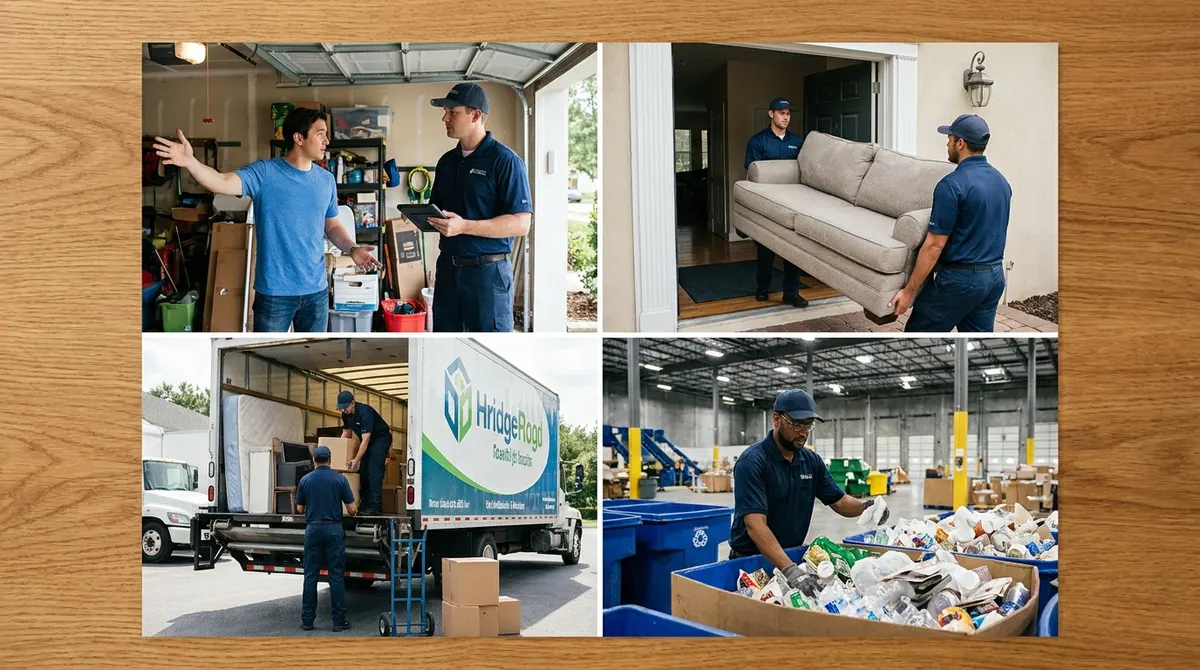
The junk removal process runs from quote request to on-site estimate, crew loading, volume confirmation, payment, and disposal at a transfer station or donation partner. Our crews do the lifting and the hauling on local pickups, with the exact price confirmed in person before anything leaves the property.
| Load size | Approximate volume | Typical price range |
|---|---|---|
| Single item (couch, mattress, treadmill) | 1-2 cubic yards | $75-$175 |
| Quarter truck (small cleanout, a few pieces) | 4-5 cubic yards | $150-$300 |
| Half truck (garage or one-room cleanout) | 7-9 cubic yards | $300-$500 |
| Full truck (whole-house, estate, or shop cleanout) | 15-18 cubic yards | $500-$800+ |
| Special-handling items (appliances with freon, tires, mattresses) | Priced per item | $15-$60 added disposal fee each |
Junk removal load sizes, volume, and typical price ranges (exact price confirmed on site)
Junk removal quotes start with an item list or photos, not a site visit
Step one is a phone call or web form describing what needs to go. Photos of the pile, the room, or the driveway let a dispatcher give a ballpark load size and price range in a few minutes. Useful details include item count, whether anything is above the first floor, and whether the truck can park within about 50 feet of the load. A phone number that reaches a live person shortens this step considerably. Phone and photo quotes are ballpark ranges, not final invoices — volume is what sets the real number, and volume is judged on site.
The on-site junk removal estimate is confirmed in writing before loading begins
Step two happens the moment the crew arrives. The lead walks the job, looks at the actual pile, and quotes a firm price based on how much truck space the load will fill plus any special-handling items. Customers approve or decline before a single item is touched, and there is no charge for the visit itself. On r/junkremoval, homeowners repeatedly warn that sight-unseen phone quotes get revised on arrival; the fix is a walkthrough estimate that is stated out loud and agreed to first. An honest crew will not start loading until the number is approved.
Junk removal arrival windows run 2-3 hours with a call ahead
Step three is scheduling. Most junk removal appointments are booked as a 2-3 hour arrival window rather than a fixed minute, because prior jobs can run long when stairs or heavier-than-expected items appear. Crews typically call or text 15-30 minutes out. Same-day and next-day slots are common when a truck is already working nearby, and morning slots hold their times most reliably. Customers do not need to be present for the entire job, but someone should be there for the estimate approval and the final walk-through.
Junk removal crews do all lifting, stair carries, and cleanup
Step four is the labor, and it is the reason people hire rather than rent a dumpster. Two-person crews carry items down staircases, through narrow hallways, out of crawl spaces, and across yards. Furniture is disassembled when it will not fit through a door. Loose debris gets shoveled or bagged, and the area is swept or raked before the crew leaves. Nothing needs to be moved to the curb beforehand. Items the crew cannot legally take — wet paint, solvents, propane tanks, asbestos, medical waste — are identified during the estimate so there are no surprises at the truck.
Junk removal volume is confirmed at the truck bed and payment follows completion
Step five and six close the job. Once the load is in, the lead shows how much of the truck bed it filled — quarter, half, three-quarter, or full — and that mark is the billing tier already agreed to during the estimate. If the load came in smaller than quoted, the price drops to the lower tier. Payment is collected after the work is finished, with card, cash, and digital payment accepted by most operators. A receipt or emailed invoice documents the load size, disposal fees, and total for landlords, executors, and property managers who need records.
Junk removal disposal ends at a transfer station, recycler, or donation partner
Step seven is where the load actually goes. Trucks are sorted rather than dumped whole: metal, appliances, and scrap go to a recycler; clean wood, cardboard, and yard waste go to a recycling or compost facility; usable furniture, tools, and appliances go to local charity or reuse outlets; the remainder is weighed in at a licensed transfer station or landfill. Redditors on r/HomeImprovement often push back on vague 'we donate everything' claims, and the honest answer is that donation depends on condition — stained mattresses and broken particleboard are not accepted. Recycling and donation rates vary by load, and disposal tipping fees are already built into the quoted price.