How Much Does It Cost to Remove a Single Item?
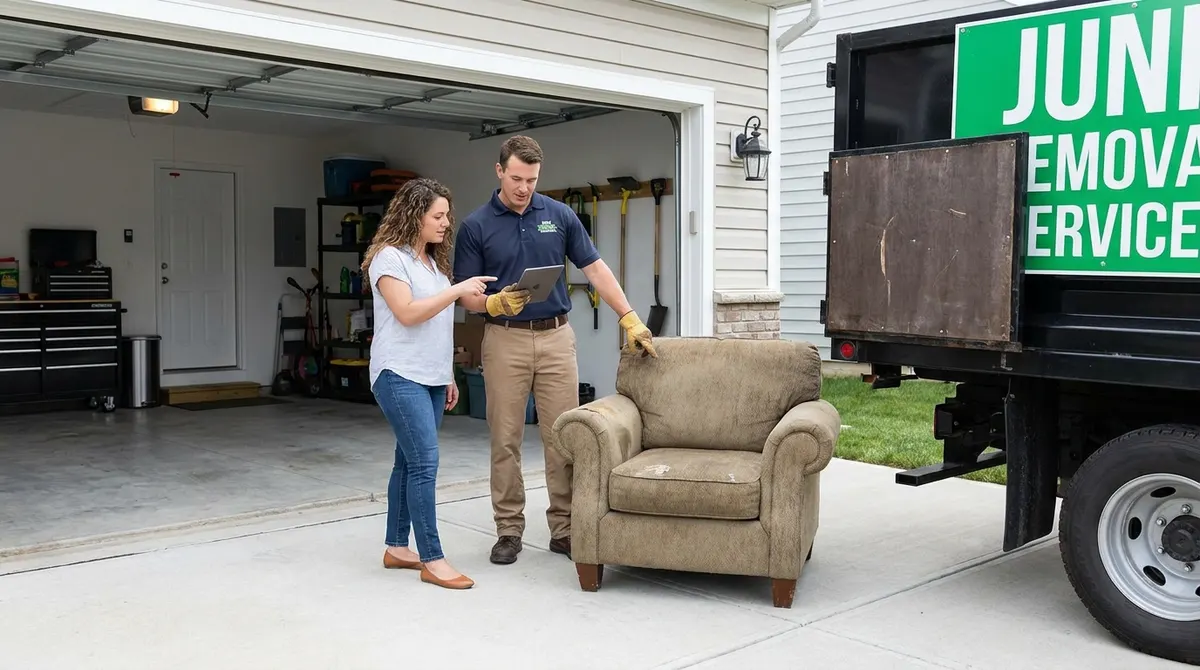
Single-item removal generally lands between $75 and $175, with heavy pieces priced higher. Our crew handles the lift, the stairs, the truck, and the disposal run, then confirms the exact figure on site before anything moves — no guessing from a photo.
| Single item | Typical price range |
|---|---|
| Couch, loveseat, or sectional piece | $95 – $185 |
| Recliner, armchair, or office chair | $75 – $140 |
| Mattress or box spring (incl. disposal surcharge) | $85 – $160 |
| Dresser, desk, or bookcase | $80 – $150 |
| Refrigerator or freezer (refrigerant recovery) | $110 – $200 |
| Washer, dryer, or dishwasher | $95 – $170 |
| Treadmill or elliptical (partial disassembly) | $125 – $250 |
| TV or electronics (e-waste fee applies) | $60 – $120 |
| Upright piano | $200 – $450 |
| Hot tub (drained, cut down for hauling) | $300 – $600 |
| Gun safe (600 lb+, ground floor) | $225 – $500 |
Typical single-item junk removal price ranges (market estimates, confirmed on site)
Single-item junk removal is priced on a crew minimum, not a per-pound rate
Every junk removal job carries fixed costs: a two-person crew, a truck, fuel, and a tipping fee at the transfer station or landfill. Those costs exist whether the truck leaves with one couch or twelve. That is why a single item is quoted against a minimum charge — commonly $75 to $175 — instead of a weight-based rate. The practical takeaway is that the second and third item cost far less than the first, so most customers group a few pieces into one visit to lower the cost per item.
Single-item removal costs more when stairs, long carries, or tight doorways add labor time
Access drives price more than the item itself. A sofa sitting in an open garage is a five-minute job. The same sofa on a third-floor walk-up, down a switchback stairwell, past a 30-inch doorway, and 200 feet to street parking can take three times the labor and push the quote 30% to 60% higher. Elevator buildings with reserved freight windows, gated communities, and alley-only access also affect timing. Accurate access details — floor number, stairs, parking distance, doorway width — produce an accurate quote.
Appliance removal adds a refrigerant recovery or e-waste fee at the disposal facility
Refrigerators, freezers, window air conditioners, and dehumidifiers contain refrigerant that must be recovered by a certified technician before the shell can be scrapped. That step commonly adds $25 to $75 to a single-appliance price. Televisions, monitors, and computers are handled as electronic waste and carry facility fees generally in the $20 to $45 range. These are pass-through disposal costs, not markup, and reputable haulers itemize them in the quote rather than burying them.
Mattress and box spring removal carries a separate landfill surcharge in most regions
Mattresses are banned from standard compaction at many facilities and are charged individually — often $15 to $50 per piece — because they jam equipment and are increasingly routed to recycling programs. A king set counts as two pieces. Bagging is required in some jurisdictions for bed bug control. A single mattress removal therefore usually quotes near $85 to $160 once the crew minimum and the per-piece surcharge are combined.
Heavy items like pianos, hot tubs, and safes are quoted by weight, access, and breakdown time
Upright pianos run 300 to 500 pounds and grands exceed 600, so pricing generally starts near $200 and climbs with stairs. Hot tubs must be drained, disconnected, and usually cut into sections to clear a gate — a two to four hour job that typically lands between $300 and $600. Gun safes above 600 pounds may require a stair-climbing dolly or additional crew. These jobs are priced after a look at the item and the exit path, never sight-unseen.
Junk removal minimums are a recurring frustration on r/HomeImprovement — and the math behind them is straightforward
Homeowners on r/HomeImprovement regularly paraphrase the same complaint: paying close to $100 to have one chair taken away feels steep. The counterpoint posted just as often is that a rented truck, a helper, a weekend afternoon, and the dump gate fee frequently total more — and that is before lifting anything down a staircase. Landfill gate fees alone commonly run $40 to $80 per ton with a minimum charge. Full-service removal converts that whole afternoon into a 15-minute appointment where the crew does the carrying, sweeps up, and handles the disposal paperwork.
Single-item quotes are confirmed in person on a free on-site estimate before any lifting starts
The ranges on this page are ballpark figures drawn from typical market pricing. The exact number depends on the item's size and weight, the floor it sits on, the carry distance, and the disposal category it falls into. A crew arrives, looks at the piece and the exit route, and gives a firm all-in price — labor, hauling, and disposal fees included. Work begins only after that price is accepted, and there is no charge for the visit itself.
Local pricing and disposal specifics that affect a single-item quote
Three local factors move a single-item price more than anything else. First, transfer station gate fees: municipal and private facilities set their own per-ton rates and minimum charges, and those minimums are why a one-item load still triggers a disposal cost. Second, item-specific bans and surcharges — mattresses, tires, refrigerant appliances, paint, and electronics are typically excluded from general waste streams and billed separately, and some counties require them to go to designated recycling drop-offs on limited hours. Third, building and neighborhood access: older housing stock with narrow stairwells, apartment complexes that require freight elevator reservations, HOA rules limiting truck hours, and streets with no curbside parking all add labor minutes that show up in the quote. Donation is worth asking about first — furniture in resale condition can sometimes be routed to a local charity rather than the landfill, which keeps the item out of the waste stream. Crews confirm the applicable fees for the specific item and address during the on-site estimate.
Related questions
How much does it cost to have a couch hauled away?
A single couch typically runs $95 to $185 depending on size, floor level, and carry distance. Sectionals are priced per piece, and stairs commonly add 30% or more.
Do junk removal companies charge a minimum fee?
Yes. Nearly all haulers set a minimum charge — commonly $75 to $175 — that covers the crew, truck, and disposal fees regardless of how little is taken.
Is it cheaper to remove several items at once than one at a time?
Substantially. The first item absorbs the crew minimum, so additional pieces on the same visit usually cost far less per item than booking separate trips.
How much does mattress removal and disposal cost?
Expect roughly $85 to $160 for a single mattress once the crew minimum and the per-piece landfill or recycling surcharge of $15 to $50 are combined.
How much does it cost to remove an old refrigerator?
Refrigerator removal generally runs $110 to $200, including a $25 to $75 refrigerant recovery fee required before the unit can be scrapped or recycled.