How Does Junk Removal Work, Step by Step?
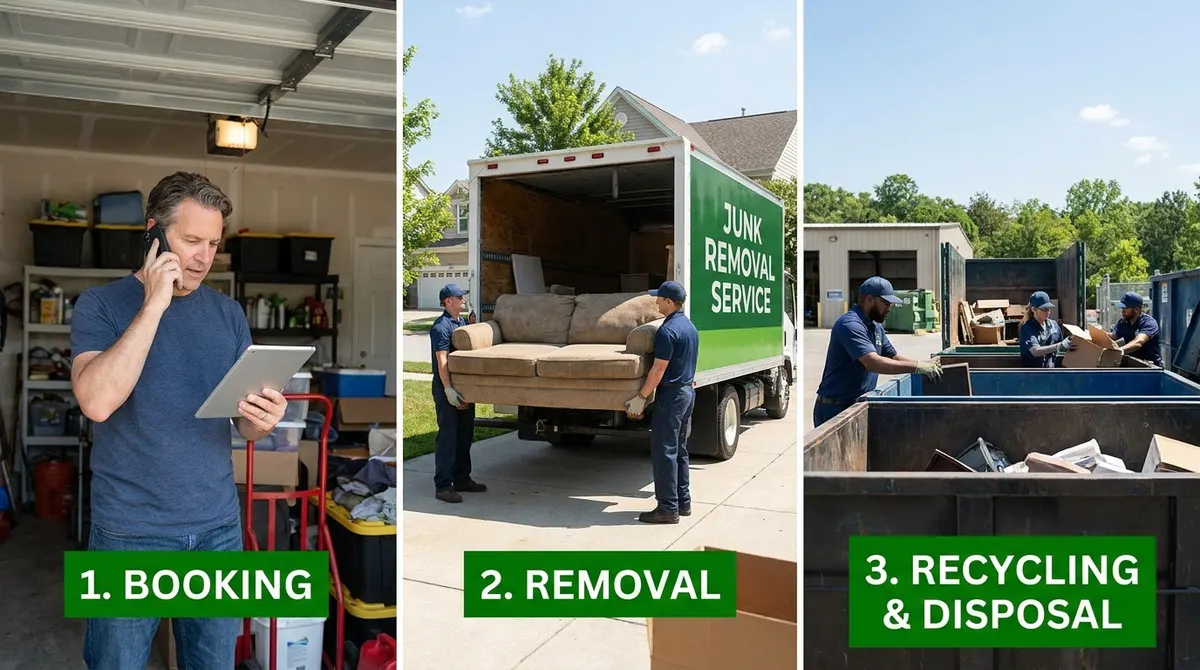
Junk removal is a done-for-you service: a crew arrives in a scheduled window, quotes the load on sight, carries everything out, and hauls it to a licensed disposal or donation site. Our team schedules around local transfer station hours, which is why same-day slots fill earliest.
| Load size | What usually fits | Typical price range |
|---|---|---|
| Single item | One couch, mattress, appliance, or hot tub cover | $75 – $150 |
| 1/8 truckload (~2 cu yd) | A few boxes, a recliner, small cleanout pile | $100 – $175 |
| 1/4 truckload (~4 cu yd) | Bedroom set or a light garage corner | $175 – $300 |
| 1/2 truckload (~8 cu yd) | Full garage or small basement cleanout | $300 – $450 |
| 3/4 truckload (~12 cu yd) | Two-room cleanout or deck tear-out debris | $400 – $550 |
| Full truckload (15–16 cu yd) | Whole-home cleanout, estate or eviction load | $500 – $800 |
| Multi-truck job | Hoarding cleanouts, commercial clear-outs | Quoted on site |
Junk removal truckload sizes, typical loads, and market price ranges
Junk removal starts with a photo or phone estimate before anyone is dispatched
Step one is a description of the load. Most companies ask for two or three photos or a short list — "a sectional, a treadmill, about ten boxes" — and return a ballpark range tied to truck volume. Photo estimates are ranges, not final prices, because volume looks different in person once a pile is stacked. Booking takes a name, address, and gate or elevator details. Written price confirmation happens on site, not over the phone.
Junk removal appointments use a two-hour arrival window, not an exact clock time
Crews are routed in blocks, so scheduling is typically an 8–10am, 10–12pm, or 12–2pm style window rather than a fixed minute. A courtesy call or text usually goes out 15–30 minutes ahead. Same-day service is often available when a morning route has an open slot, and next-day is standard for larger cleanouts. Monday mornings and the last weekend of the month book fastest because of move-out volume.
Junk removal price is confirmed on site by walking the load before any lifting starts
The crew walks the garage, curb pile, or basement, estimates how much of the truck bed the items will occupy, and gives a flat number. Nothing is loaded until that price is accepted. Volume-based pricing means the count of items matters less than the space they fill — twenty flattened boxes cost far less than one mattress and a box spring. Extra fees are disclosed at this stage, not after the truck is full.
Junk removal labor covers stair carries, disassembly, and interior pickup at no separate charge in most markets
Full-service means the crew does the physical work. A two-person team carries items down stairs, breaks down bed frames and shelving, removes doors from appliances where needed, and protects walls and railings on the way out. Homeowners are not asked to drag anything to the driveway. Third-floor walk-ups and long carries from back yards can push a load into a higher volume bracket, which is quoted before work begins.
Junk removal ends with the space swept and the load sorted for donation, recycling, or the transfer station
After loading, crews broom-sweep the footprint the junk occupied. The truck then makes stops based on contents: usable furniture and working appliances to donation centers, metal to a scrap yard, cardboard and e-waste to recycling, and the remainder to a licensed transfer station where the load is weighed. Typical single-load appointments take 15–60 minutes on site. A receipt is provided at completion, and donation drop-offs can usually be documented on request.
Junk removal complaints on Reddit trace back to phone quotes that were never confirmed in person
Homeowners posting in r/junkremoval commonly paraphrase the same frustration: a low number quoted sight-unseen, then a higher figure once the crew arrived. The fix is structural — the price should be restated and agreed to on site before loading, against a marked truck bed. Another recurring thread warns about unlicensed haulers who fly-dump loads. A legitimate operator can name the transfer station used and hand over a disposal receipt, which is worth asking for on the first call.
Junk removal excludes hazardous materials, which is why the item list matters at booking
Trucks cannot legally accept paint, solvents, motor oil, pesticides, propane tanks, asbestos, or medical waste; those go to a household hazardous waste event or a designated county drop-off. Items that are accepted but carry surcharges in most markets include mattresses, tube and flat-screen TVs, tires, and refrigerant appliances such as fridges and window AC units. Naming these upfront keeps the on-site quote identical to the phone range.
Local junk removal specifics that affect the step-by-step process
Disposal cost is the largest variable in any local quote. Transfer stations in most regions charge by the ton — commonly in the $40–$90 per ton range with minimum-load fees — so heavy debris like tile, plaster, dirt, and roofing shingles prices differently than an equal volume of furniture. Municipal bulk pickup programs typically allow only a set number of items per year and require curbside placement, which is why interior cleanouts, apartment stair carries, and same-week deadlines move to a paid hauler. Condo and HOA properties often restrict loading to a service entrance or a reserved elevator window, so those details are confirmed when booking. Refrigerant appliances require certified recovery before crushing, usually a $20–$50 add-on, and mattress recycling fees are common where landfill bans apply. Route timing also follows transfer station hours: most close mid-afternoon on weekdays and early on Saturdays, so large multi-load jobs are started in the morning. Exact pricing is confirmed at the free on-site walkthrough, before loading.
Related questions
How much does junk removal cost per truckload?
Full truckloads of 15–16 cubic yards typically run $500–$800, with quarter loads at $175–$300 and half loads at $300–$450. Heavy construction debris is priced by weight.