How Do You Legally Dispose of Appliances, Mattresses, and Electronics? — Complete Guide
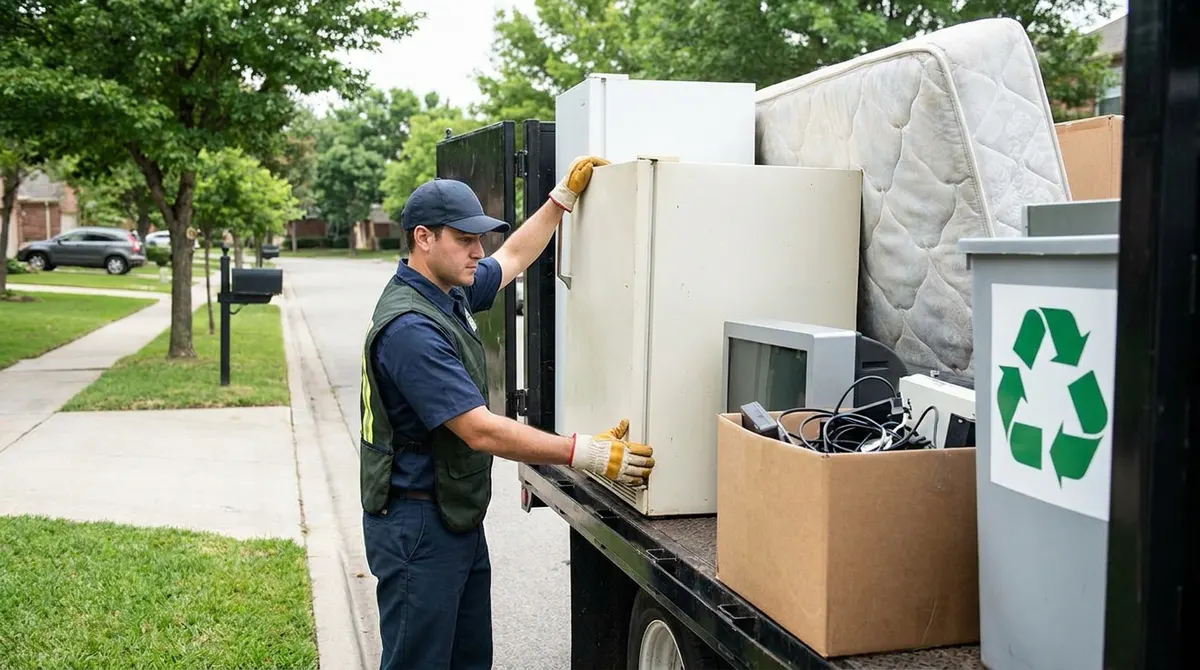
Appliances, mattresses, and electronics each have their own legal disposal route — refrigerant recovery, mattress recycling, certified e-waste handling. Our crew sorts and routes all three from the curb, driveway, or basement, following the transfer station and county rules that apply at the local drop-off point.
| Item | Legal requirement | Typical cost range (hauled for you) |
|---|---|---|
| Refrigerator / freezer | EPA Section 608 certified refrigerant recovery before scrapping; recovery tag often required by scrap yards | $85–$175 per unit |
| Window AC unit / dehumidifier | Same refrigerant recovery rule as fridges; small sealed systems still count | $60–$120 per unit |
| Washer, dryer, dishwasher, stove | No freon rule; most transfer stations accept as scrap metal, often with a per-item fee | $75–$150 per unit |
| Mattress or box spring | Landfill-banned in a growing number of states and counties; must go to a recycling facility, per-piece fee applies | $75–$150 per piece |
| TV, CRT monitor, computer | State e-waste law: banned from household trash in roughly half of U.S. states; certified recycler required | $50–$125 per item |
| Mixed load (appliance + mattress + electronics) | Each stream separated and routed to its own legal endpoint | $175–$600 by truck volume |
| Full truckload cleanout | Sorted at the yard; recyclables and banned items pulled before landfill | $500–$850 |
Legal disposal requirement and typical cost by item type
Refrigerator and AC disposal requires certified refrigerant recovery before the metal is scrapped
EPA Section 608 of the Clean Air Act makes it illegal to knowingly vent refrigerant during appliance disposal. Refrigerant must be recovered by a certified technician using recovery equipment before the sealed system is cut, crushed, or scrapped. That rule covers refrigerators, freezers, window air conditioners, dehumidifiers, and water coolers. Most scrap yards will refuse a fridge without a recovery tag or a signed statement confirming the freon was evacuated. Older units may also contain mercury switches, oil, and PCB-bearing capacitors that have to be pulled separately. Curbside trash crews in most areas will not take a fridge for exactly this reason. A hauling crew moves the unit to a facility set up for recovery, which is the practical path for most homeowners who do not have a certified tech on hand.
Mattress disposal is landfill-banned in a growing list of jurisdictions and carries a per-piece recycling fee
Mattresses are one of the most restricted household items in the waste stream because they jam compactors and take up enormous landfill airspace. Several states run mandated mattress recycling programs funded by a fee collected at the point of retail sale, and many counties and transfer stations independently ban mattresses from the tipping floor or charge a surcharge of roughly $10–$40 per piece. Recycling is the intended endpoint: steel springs, foam, cotton batting, and wood frames are separated and sold as commodities. Dumping a mattress on the curb or a vacant lot is illegal dumping in every state and commonly carries fines starting in the hundreds of dollars. Box springs count as a separate piece and are billed separately at nearly every facility. Wrapping the mattress in plastic before removal is required by some facilities and is standard practice for bed-bug containment.
Electronics disposal follows state e-waste law, which bars TVs and CRT monitors from household trash
Roughly half of U.S. states have enacted electronics disposal bans, and CRT televisions and monitors are the most widely restricted item because the glass funnel contains several pounds of lead. Lithium-ion batteries are a second issue: batteries left in devices are a documented cause of fires in collection trucks and sorting facilities, so many haulers require batteries be identified before pickup. Legal handling means delivery to a certified electronics recycler — the recognized standards are R2 and e-Stewards — where devices are dismantled and commodities are recovered domestically rather than exported. Data-bearing devices deserve one extra step: hard drives should be removed or wiped before handoff, since certified downstream processing is not the same thing as a certificate of data destruction.
Junk removal pricing for appliances, mattresses, and electronics runs $75 to $600 per pickup
Pricing on regulated items is built from two parts: labor to move the item out of the house and the disposal fee charged at the endpoint. Single-item pickups generally land in the $75–$150 range in most markets. A refrigerator sits at the higher end because of the refrigerant recovery step, and a mattress-plus-box-spring pair is billed as two pieces. Mixed loads are priced by how much of the truck bed fills, typically $175–$600 for a quarter to half load. Stairs, tight basement staircases, and second-floor bedrooms add labor time. These figures are market-range ballparks, not quotes — the exact number gets confirmed on a free on-site look before any lifting starts.
Licensed hauler paperwork is what documents legal disposal after the truck leaves
The legal exposure on a banned item does not end when the item leaves the property. Property owners have been fined for material later traced back to them after a hauler dumped it. Asking a hauler where each stream goes — which scrap yard, which mattress recycler, which certified e-waste processor — is a reasonable question with a specific answer. On commercial and property-management jobs, a disposal receipt or weight ticket from the receiving facility is the usual documentation. Contributors on r/junkremoval regularly warn that the cheapest quote on a fridge is often the one where nobody paid for refrigerant recovery, which is precisely the corner-cut that creates the liability. Landlords on r/Landlord raise a parallel point about tenant-abandoned mattresses: the disposal fee is small next to an illegal dumping citation.