How Do You Get Rid of an Old TV? — Complete Guide
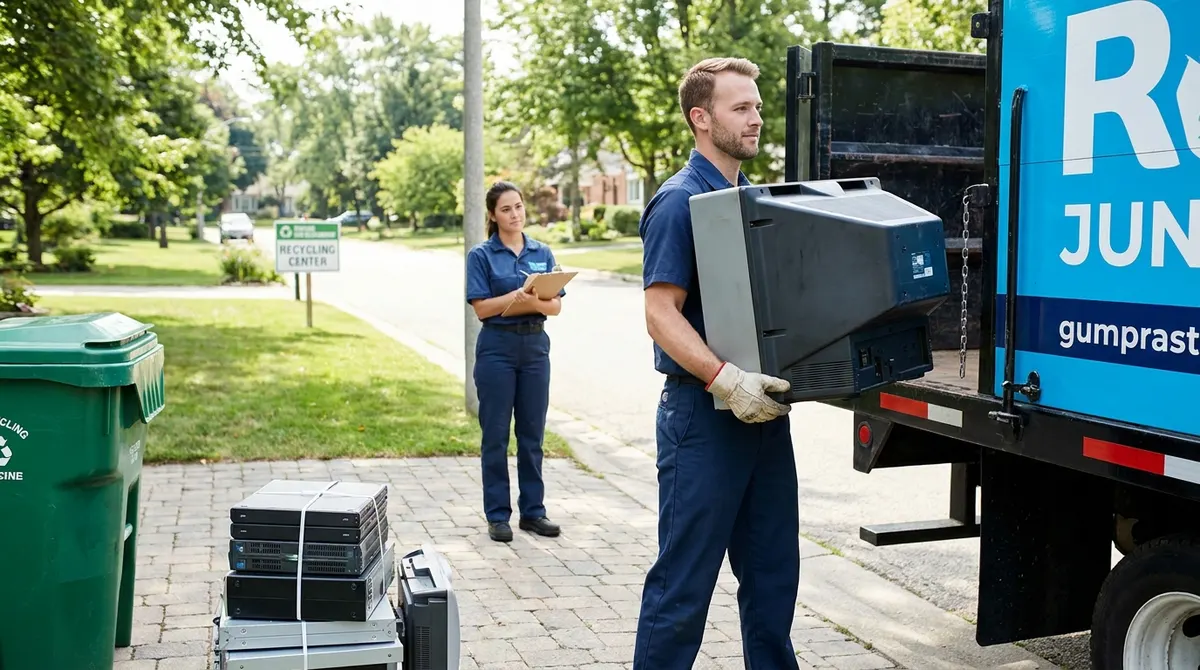
Getting rid of an old TV is usually a done-for-you pickup: about $75 to $150 for a single set, more when it rides out with other items. Our crew handles the stairs, the carry-out, and the drop-off at a local electronics recycler.
| TV type / size | Typical weight | Typical removal cost range |
|---|---|---|
| Flat-screen LCD/LED, 32"–43" | 15–30 lbs | $75–$125 single-item pickup |
| Flat-screen LCD/LED, 55"–75" | 40–70 lbs | $85–$150 (wall-mounted adds labor) |
| CRT tube TV, 20"–27" | 50–100 lbs | $85–$150, two-person lift |
| CRT tube TV, 32"+ or console model | 120–200+ lbs | $125–$200, two-person lift |
| Rear-projection / big-screen cabinet | 200–300 lbs | $150–$300, often dollied or partly disassembled |
| TV plus other items (partial truckload) | Varies | $150–$400 by volume |
| Full truckload cleanout including electronics | Varies | $450–$700+ by volume |
Old TV types, typical weight, and market-range removal cost
Old TV disposal starts with the fact that curbside trash crews leave televisions at the curb
Most residential trash contracts exclude televisions and monitors as electronic waste, so a TV set out with household bags is commonly tagged and left behind. Bulk-item pickup days, where offered, frequently list electronics as an excluded category even when they accept mattresses and furniture. That leaves four realistic paths: a drop-off at an electronics recycler, a retailer haul-away tied to a new TV delivery, a scheduled e-waste collection event, or a junk removal pickup that handles the lift and the transport in one visit. The last option is the only one that does not require the homeowner to load 100-plus pounds of glass into a vehicle.
CRT tube TVs are handled as regulated e-waste because the glass contains lead
A cathode-ray tube television contains roughly 2 to 8 pounds of lead in the funnel glass, plus phosphor coatings, which is why CRTs are the hardest screen type to place. Thrift stores and donation centers routinely refuse tube TVs outright, and some recyclers charge a per-unit CRT processing fee that flat screens do not carry. Cracking or dumping a tube set is never a legitimate option. A removal crew keeps the tube intact, moves it upright on a dolly, and routes it to a facility that accepts CRT glass for downstream processing.
Flat-screen TV removal is priced by access and labor, not just by screen size
A 65-inch LED weighs less than a 27-inch tube TV, so weight rarely drives the price on modern sets. Access does. A second-floor bedroom, a finished basement with a tight stair turn, or a TV still bolted to a wall mount adds handling time, and wall-mounted sets need the bracket unbolted before the screen comes down. Crews typically bring a moving blanket and two people for anything 55 inches or larger because the panel flexes and cracks if it is carried by one person at an angle. Confirmed pricing comes from a free on-site look at the set and the path out.
Retailer haul-away and recycling drop-off work for one TV if transport is not the problem
Several national electronics retailers accept televisions for recycling at a per-unit fee, and delivery crews will often take the old set when a new TV is installed, sometimes bundled into the delivery charge. Municipal and county household hazardous waste or e-waste events accept screens on specific dates, usually with a per-household limit. Both routes are legitimate and worth using when the TV is small, the vehicle is available, and the schedule lines up. Neither route solves a 200-pound projection cabinet in a basement, which is where a scheduled removal makes more sense.
Old TV pickup pricing follows single-item minimums and then truck volume
Junk removal is volume-based. One television falls under a company's minimum-load charge, commonly in the $75 to $150 range depending on set type and access. Once a second and third item are added — the TV stand, an old receiver, a recliner — the job moves to a partial-truckload rate, often $150 to $400, and the per-item cost drops sharply. The practical takeaway: homeowners who pair the TV with other clutter get more value from the same trip. All figures here are market ranges, and the exact number is confirmed in person before any lifting starts.
Reddit threads on old TV disposal center on refusal and hidden fees
Users in r/junkremoval frequently describe the same sequence, paraphrased: the tube TV sat in the garage for years because the thrift store said no and the trash crew drove past it. That matches how CRTs are classified — regulated e-waste, not household trash. A recurring point in r/eWaste discussions, also paraphrased, is surprise at per-unit CRT fees at recycling centers, since flat screens sometimes go free while tube glass does not. The spec behind the complaint is straightforward: CRT glass runs 2 to 8 pounds of lead per set and requires separate processing, which is exactly what the fee funds.
Local specifics that decide how an old TV gets removed
Three local variables set the price and the route. First, the residential hauler's contract: electronics are an excluded category in most standard trash agreements, and bulk-pickup days in many service areas list TVs and monitors as non-collectible. Second, the nearest accepting facility: county transfer stations and certified electronics recyclers in most markets take screens during posted weekday hours, frequently with a per-unit CRT charge, and that gate fee plus drive time is built into any removal quote. Third, the building itself — older two-story homes with narrow stair turns, walk-out basements, and third-floor apartment walk-ups all add labor time to a tube TV or a projection cabinet. Seasonal e-waste collection events run in many communities and are a solid free-standing option for one small flat screen, though limits per household are common. For a heavy set, a wall-mounted panel, or a TV that is part of a larger cleanout, a scheduled crew visit is the practical answer, and the exact cost is confirmed on a free on-site look before work begins.
Related questions
Will junk removal take a CRT tube TV?
Yes. CRT televisions are accepted as regulated e-waste and moved intact to a recycler that processes leaded glass. Tube sets from 50 to 200 pounds are handled as a two-person lift, typically inside a $85 to $200 single-item range.