Hoarding Cleanout: What Is the Process and Cost? — Complete Guide
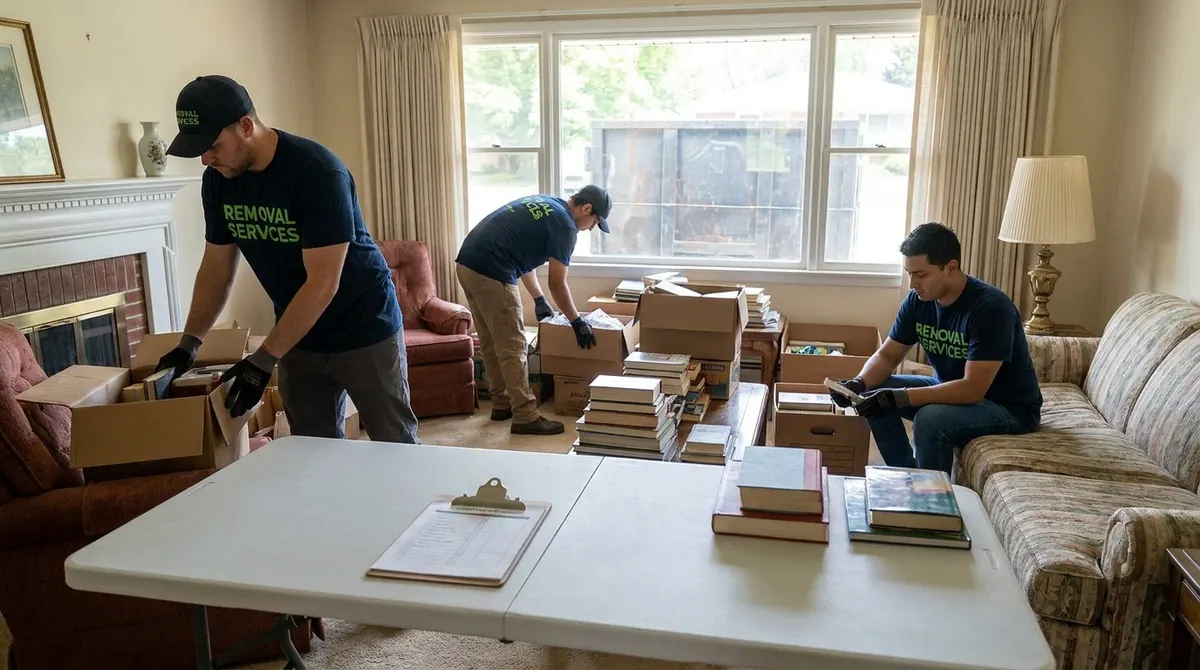
Hoarding cleanouts generally run $1,200 to $8,000 based on how much volume leaves the property, and the work is done for you — sorting, lifting, hauling, and disposal included. Our crew handles compassionate, discreet cleanouts on local residential and estate properties, with pricing confirmed on site.
| Severity / Scope | Typical Volume | Typical Cost Range | Typical Timeline |
|---|---|---|---|
| Level 1-2: one or two cluttered rooms, clear walkways | 1-2 truckloads | $700 - $1,600 | 4 hours - 1 day |
| Level 2-3: multiple rooms, blocked furniture, heavy paper and packaging | 3-5 truckloads | $1,800 - $3,800 | 1 - 2 days |
| Level 3-4: full home, narrow goat trails, appliance and furniture removal | 6-10 truckloads | $3,500 - $7,500 | 2 - 3 days |
| Level 4-5: floor-to-ceiling accumulation, structural access issues, odor | 10+ truckloads or roll-off container | $7,500 - $15,000+ | 3 - 5+ days |
| Add-on: biohazard, animal waste, or pest-affected areas | Priced by affected area | $500 - $3,000+ | Same visit or separate day |
| Add-on: carpet, subfloor, or flooring removal | Per room | $250 - $900 per room | Same visit |
Hoarding cleanout cost and timeline by severity level (market-range estimates; exact price confirmed on site)
Hoarding cleanout pricing is driven by volume hauled, not house square footage
Junk removal companies price hoarding cleanouts by how much material physically leaves the property, measured in truckloads or cubic yards. A standard removal truck holds roughly 15 to 20 cubic yards, which equals about eight to ten pickup-truck beds. Market rates run about $350 to $750 per full load, with the per-load rate dropping on multi-load jobs. A 900-square-foot condo packed floor-to-ceiling can cost more than a 2,400-square-foot house with two crowded rooms. Secondary cost drivers include stair carries, long walks from door to truck, no driveway access for the truck, and heavy items such as pianos, safes, appliances, and waterlogged furniture.
Hoarding cleanout process runs in five stages, beginning with a free on-site walkthrough
Stage one is the walkthrough: a crew lead inspects every room, notes access limitations, flags biohazards or pests, and produces a written price range or flat quote. Stage two is the sort plan — the client or family identifies keep, donate, and discard categories and any target items to hunt for. Stage three is the physical cleanout, working room by room and clearing egress paths first for safety. Stage four is disposal routing: donations to charity partners, metals and electronics to recyclers, and the remainder to a licensed transfer station. Stage five is a broom-level sweep and a final walkthrough with the client. Deep cleaning, sanitizing, and odor work are scheduled after the volume is out.
Hoarding cleanout crews sort for cash, documents, and valuables before anything is hauled
Experienced cleanout crews expect to find money, jewelry, deeds, titles, tax records, photographs, firearms, and prescription medication buried in accumulation, and they are trained to stop and set those items aside rather than bag them. A written keep-list given to the crew lead before work starts is the single most effective way to protect valuables. Families frequently ask for specific targets — a wedding ring, a life-insurance policy, military discharge papers — and those searches are handled as part of the sort, not as an upcharge. Sensitive paperwork is stacked in labeled bins for the client to review rather than shredded on site.
Hoarding cleanout timelines average one to four days for a full residential property
A single hoarded room is usually a half-day job for a three-person crew. A full single-family home at Level 3 to 4 typically takes two to three working days, and Level 5 conditions with structural or safety concerns can run five days or longer. Crews normally work 6 to 8 hours per day, because sorting pace — not hauling pace — sets the schedule when the client is present and reviewing items. Emergency timelines exist: eviction deadlines, code-enforcement notices, and closing dates are common triggers, and same-day or next-day starts are often available for smaller scopes when a truck is open.
Hoarding cleanout add-ons for biohazard, pests, and odor are quoted separately from hauling
Standard junk removal pricing covers sorting, lifting, loading, hauling, and disposal fees. It does not cover specialty remediation. Animal waste, rodent infestation, mold behind accumulation, sharps, human biohazard, and saturated subfloor all require different equipment, PPE, and disposal streams, and are priced by affected area — commonly $500 to $3,000 or more. Odor treatment after a cleanout typically involves removing porous materials such as carpet, padding, and upholstered furniture, then treating the space; carpet and pad removal runs about $250 to $900 per room. Reputable companies disclose which of these fall inside their license and which get referred to a remediation contractor.
Hoarding cleanout costs drop when donation and recycling routing reduces landfill tonnage
Disposal fees are a real line item. Transfer stations charge by weight, commonly $60 to $150 per ton in most markets, plus surcharges for mattresses, tires, appliances containing refrigerant, televisions, and paint. Routing usable furniture, clothing, books, and housewares to charity partners and sending scrap metal and appliances to recyclers lowers tonnage and can trim the disposal portion of a bill. Itemized quotes that break out labor, hauling, and disposal make that savings visible. Clients who want documentation for a donation tax deduction should request receipts before the truck leaves; charity intake receipts cannot be issued retroactively.
Hoarding cleanout discussions on Reddit center on judgment and hidden fees
Paraphrasing a recurring theme in r/hoarding: family members say the hardest part is not the mess but the fear of being judged by whoever walks in the door, and they want crews who will not photograph or comment on the home. That is a fair request — discretion, unmarked or plain trucks, and no-photo policies are standard requests and easy to confirm before booking. A second recurring concern, paraphrased from r/declutter: people report being quoted low over the phone, then hit with a much higher number once the crew sees the volume. The defense is a spec-based quote — a written price tied to truckloads or cubic yards after an on-site walkthrough, with the per-load rate and disposal surcharges stated in writing.
Local market specifics that affect hoarding cleanout pricing
Local disposal rules shape the final invoice more than most homeowners expect. County and municipal transfer stations weigh loads and bill per ton, and separate handling fees are typical for mattresses, appliances with refrigerant, electronics, tires, and latex or oil-based paint — which is why a hoarded garage or basement often costs more per load than a bedroom. If the scope calls for a roll-off container placed on a public street rather than a driveway, a right-of-way or street-occupancy permit from the local public works department may be required, and permit turnaround can add a day or two to the schedule. Multi-family buildings, condos, and HOA-governed properties frequently restrict work hours, elevator use, and dumpster placement, so the walkthrough includes checking building rules before a start date is set. Cleanouts driven by a code-enforcement notice, an eviction filing, or a probate or closing deadline get scheduled around that date, and documentation of completed removal is provided on request. Because volume, access, and disposal mix vary block to block, all pricing here is a market-range ballpark — the exact number is confirmed at the free on-site visit.