Do You Need a Permit for a Dumpster or Junk Pile on Your Property? — Complete Guide
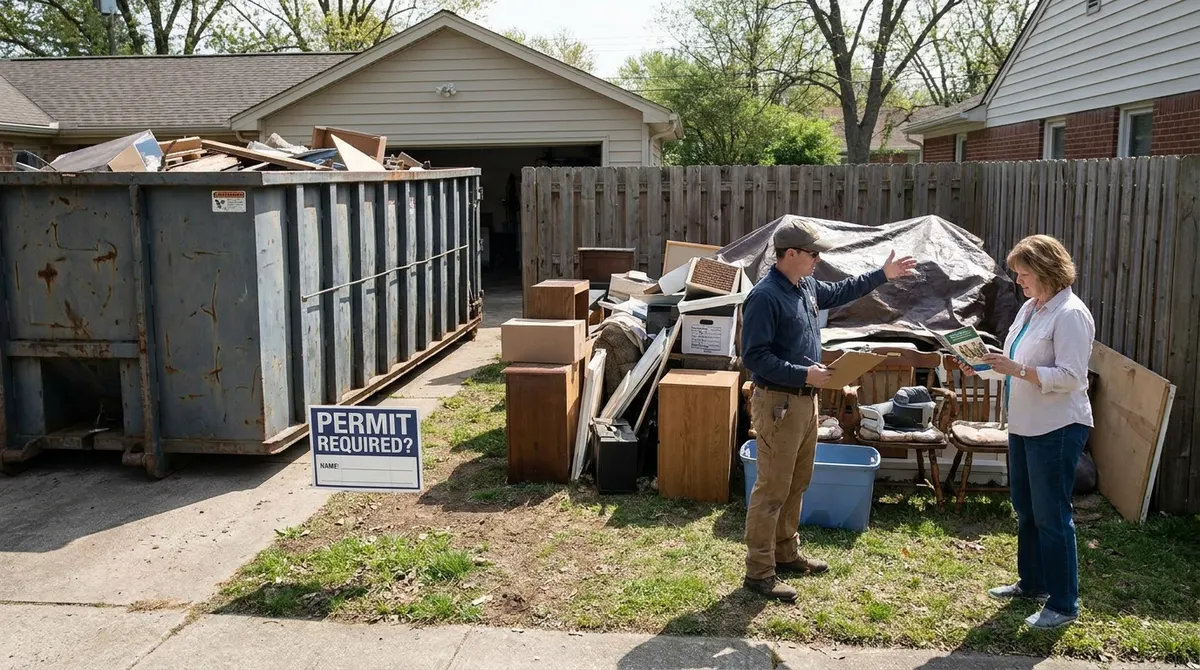
No permit is needed for a dumpster on your own driveway, but street placement usually is — and curbside piles draw code complaints. Our crew skips the permit question by loading and hauling out the same visit, priced by volume after a free look.
| Placement or method | Permit typically required? | Typical cost range |
|---|---|---|
| Roll-off dumpster on private driveway | No permit in most cities | $300–$650 per week rental |
| Roll-off dumpster in street or public right-of-way | Yes — right-of-way / encroachment permit | $25–$150 permit + rental |
| Dumpster blocking a sidewalk or bike lane | Yes — often permit plus traffic control plan | $50–$250 permit fees |
| Junk pile stored in a fenced back yard | No permit; nuisance code still applies | $0 unless cited |
| Junk pile at the curb awaiting pickup | No permit; blight citation risk if left | $100–$1,000 fine range if cited |
| Full-service junk removal (loaded and hauled same day) | No permit — nothing is left on site | $150–$600 by truck volume |
Permit requirements by placement and disposal method (typical municipal pattern)
Dumpster permits are triggered by public right-of-way placement, not by the dumpster itself
Cities regulate the street, not your driveway. A roll-off container resting fully on private paving is generally treated as a temporary use of your own land and needs no permit. The moment any part of the container, its wheels, or its loading footprint sits on pavement the city maintains — street, alley, sidewalk, or curb apron — most municipal codes require a right-of-way, encroachment, or obstruction permit. Those permits commonly run $25 to $150 and are issued for a fixed window, often 7 to 30 days. Common conditions include reflective tape or cones, no blocking of fire hydrants or driveways, and no placement across a bike lane. Permits are usually applied for through the public works or engineering counter, and many cities require 1 to 3 business days for approval.
Junk piles on private property fall under nuisance and blight code rather than permitting
There is no permit for storing junk on your own land. Enforcement instead comes from property maintenance, nuisance, or blight ordinances, which typically prohibit accumulated debris, appliances, scrap metal, tires, mattresses, or inoperable vehicles that are visible from a public street or adjoining property. Enforcement is usually complaint-driven: a neighbor calls, an inspector photographs the pile, and a written notice sets a correction window — frequently 10 to 30 days. Ignored notices can escalate to daily fines and, in some jurisdictions, city-contracted abatement billed back to the owner as a lien. Screening a pile behind a solid fence resolves many complaints; removing it resolves all of them.
HOA covenants and zoning setbacks restrict container placement even where no city permit applies
Private rules often bite harder than public ones. HOA covenants commonly cap how long a dumpster or bagster can sit in view — 3, 7, or 14 days is typical — and may require advance written notice to the board or placement out of front-yard sightlines. Zoning setbacks and easement language can also matter: a container placed over a utility easement or within a required side-yard setback can be ordered moved. Fire code adds one more constraint, requiring clear access to hydrants and unobstructed egress paths. Checking the covenants and the plat before a container is dropped prevents relocation fees, which haulers usually charge as a second trip.
Permit responsibility sits with the property owner unless the hauler pulls it in writing
The property owner or occupant is the party cited in most codes, regardless of who dropped the container. Some rental companies will pull the right-of-way permit as a service and bill it through; many will not, and their terms shift responsibility back to the customer. The safe practice is to get it in writing: who applies, who pays the fee, what dates the permit covers, and who is liable if the container overstays the window. Citations for an unpermitted street container are typically issued per day, so a forgotten expiration date is more expensive than the original permit.
Junk removal crews eliminate the permit question by loading and hauling in a single visit
Nothing is left behind, so no right-of-way is occupied and no permit window exists. A two-person crew works from the truck at the curb for the duration of the job — commonly 30 minutes to 2 hours — then leaves the property clear. That also removes the blight-citation risk that comes with a pile sitting at the curb waiting on a bulk pickup day. Full-service work covers the lifting: furniture from upper floors, appliances, garage and estate cleanouts, hot tubs, shed teardowns, and post-renovation debris. Recyclables, metal, and donatable goods are separated where the local facilities accept them.
Junk removal pricing is set by truck volume and confirmed on a free on-site visit
Volume, not weight, drives most quotes. Market-range pricing runs roughly $150 to $250 for a minimum load, $250 to $400 for a quarter to half truck, and $450 to $600-plus for a full truck, with surcharges typical on heavy debris such as concrete, dirt, roofing, and tile, and on regulated items like tires, mattresses, paint, and freon appliances. Stairs, long carries, and disassembly can add labor. Those figures are ballparks — the exact price is confirmed in person before any loading starts, because a photo rarely shows what is behind the garage door.
Reddit threads on dumpster permits point to the same two failure points
Paraphrasing a recurring theme in r/HomeImprovement: homeowners report the permit was never the problem — the neighbor complaint and the expired placement window were. A second paraphrased concern from r/Construction threads: drivers refuse a street drop on arrival once they see parked cars or a bike lane, and the rental clock starts anyway. Both map to the same specs — street placement means a $25 to $150 permit with a fixed 7 to 30 day window, while a same-day haul-out occupies the curb for under 2 hours and needs neither.