How Do You Get Rid of Construction Debris? — Complete Guide
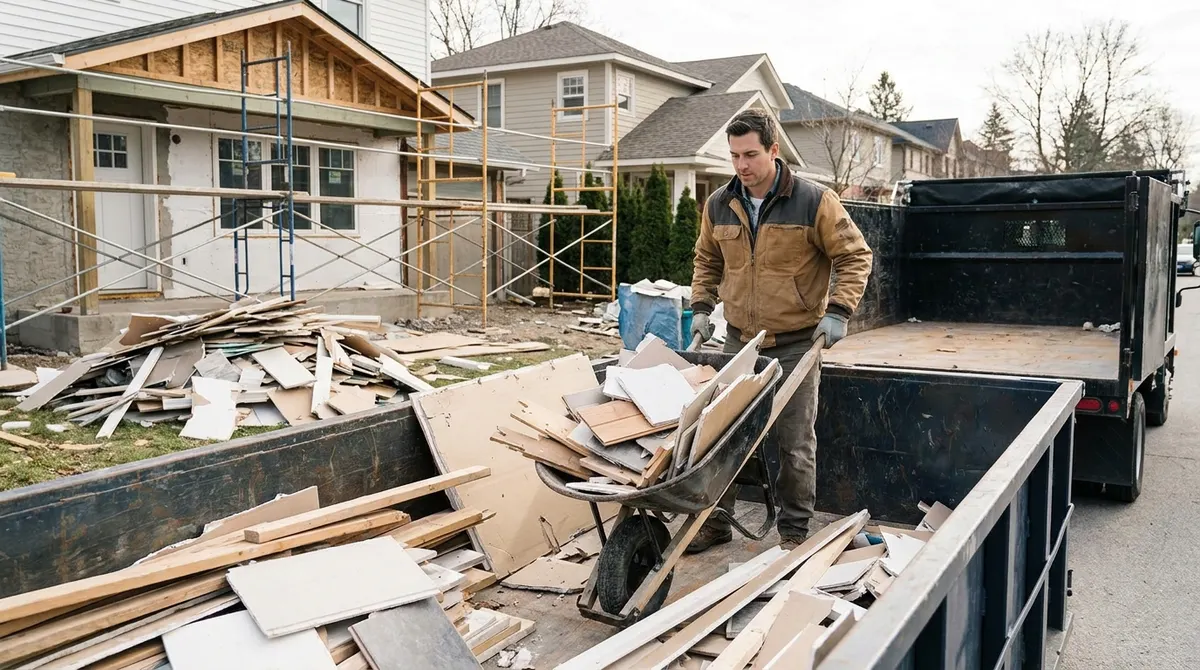
Renovation debris leaves a job site two ways: a rented dumpster you fill yourself, or a crew that loads and hauls it. Our team handles the second option — same-day pickup where the schedule allows, with local transfer-station and C&D recycling fees included in the quote.
| Debris type / job | Typical load size | Ballpark cost range |
|---|---|---|
| Single bathroom gut (vanity, tub, tile, drywall) | 1/4–1/2 truck | $200–$450 |
| Kitchen tear-out (cabinets, counters, flooring) | 1/2–3/4 truck | $350–$650 |
| Drywall, lumber, trim and framing scrap | 1/2–full truck (volume-priced) | $300–$750 |
| Concrete, brick, block, mortar | Weight-capped partial load | $250–$600+ |
| Ceramic tile, plaster and lath | Weight-capped partial load | $250–$550 |
| Roofing tear-off shingles | Priced by squares / tonnage | $300–$700 |
| Whole-house remodel cleanout | Multiple full truckloads | $800–$2,000+ |
| 10-yard dumpster rental (DIY comparison) | 1 week rental, you load | $300–$550 plus overage |
Construction debris load sizes and ballpark haul-off cost ranges (market estimates — confirmed on site)
Construction debris is excluded from most curbside trash and recycling pickup
Municipal trash service is designed for household waste, not building materials. Drywall, lumber, tile, concrete, plaster, insulation, cabinets and roofing shingles are commonly refused at the curb, and bags of mixed renovation debris are often left behind or tagged. Construction and demolition (C&D) debris must generally go to a transfer station, a C&D landfill, or a construction material recycling facility. Those sites charge by weight or by cubic yard and issue a scale ticket. Homeowners who show up in a pickup truck also need to confirm the facility accepts walk-in residential loads, since some accept commercial haulers only.
Construction debris removal is priced by volume for light material and by weight for masonry
Two pricing models cover almost every renovation job. Light bulky waste — drywall sheets, framing lumber, trim, doors, cabinets, carpet and underlayment — is priced by the volume it occupies in the truck, so a half-truck of drywall costs roughly $350–$550 in most markets. Dense material behaves differently: concrete, brick, tile, plaster and dirt hit legal truck weight limits long before they fill the bed, so those loads are quoted with a lower volume cap or a per-ton disposal add-on. Mixing a wheelbarrow of broken concrete into an otherwise light load is the most common reason a quote moves.
Full-service construction debris hauling covers the loading, the truck and the disposal fee
A dumpster rental delivers an empty container; every board, bag and bucket still has to be carried out by the homeowner or the contractor. Full-service haul-off is the opposite arrangement. The crew carries debris out of basements, upper floors and back yards, loads the truck, sweeps the area and pays the transfer-station fees as part of the quoted price. That matters on renovations where the driveway is needed for vehicles, where a container cannot sit on the street without a permit, or where debris has already accumulated in three rooms at once. Same-day and next-day pickup is common when a crew is already working nearby.
Renovation debris hauled out in stages keeps a job site safer and the schedule moving
Contractors typically schedule debris removal at the end of each demolition phase rather than once at the end. Clearing drywall and framing scrap before rough-in begins prevents nail punctures, protects finished flooring, and keeps walkways clear for inspectors. On a bathroom or kitchen remodel, a single partial-load pickup after demo day is often enough. Larger whole-house projects usually need two to four pickups spread across the schedule. Debris left piled outdoors also collects rain, and wet drywall and shingles gain weight, which increases disposal cost on weight-priced loads.
Construction debris rules change for asbestos, lead paint, treated wood and paint cans
Standard C&D loads do not include hazardous material. Suspected asbestos in popcorn ceilings, floor tile, mastic or pipe wrap requires testing and a licensed abatement contractor before demolition debris can be hauled. Homes built before 1978 fall under federal lead-safe renovation rules for painted surfaces. Liquid paint, solvents, adhesives, fuel and roofing tar are handled through household hazardous waste programs rather than general debris hauling. Pressure-treated lumber, railroad ties and fluorescent tubes have their own disposal channels at many facilities. Flagging these items before the truck arrives avoids a rejected load and a return trip.
Contractors on r/Construction and r/HomeImprovement report the same two debris surprises
Paraphrasing a recurring thread on r/Construction: crews warn that a dumpster rented by the week turns into a storage problem when the demo phase slips, and overage weight charges arrive after the container is already gone. Homeowners on r/HomeImprovement raise a related point — a half-ton pickup looks big until it is loaded with wet drywall. A standard half-ton pickup bed holds roughly 2 to 2.5 cubic yards, while a junk removal truck typically holds 12 to 15 cubic yards, which is why a one-room gut often becomes four or five trips in a personal truck.