Hot Tub Removal Cost — Complete Pricing Guide
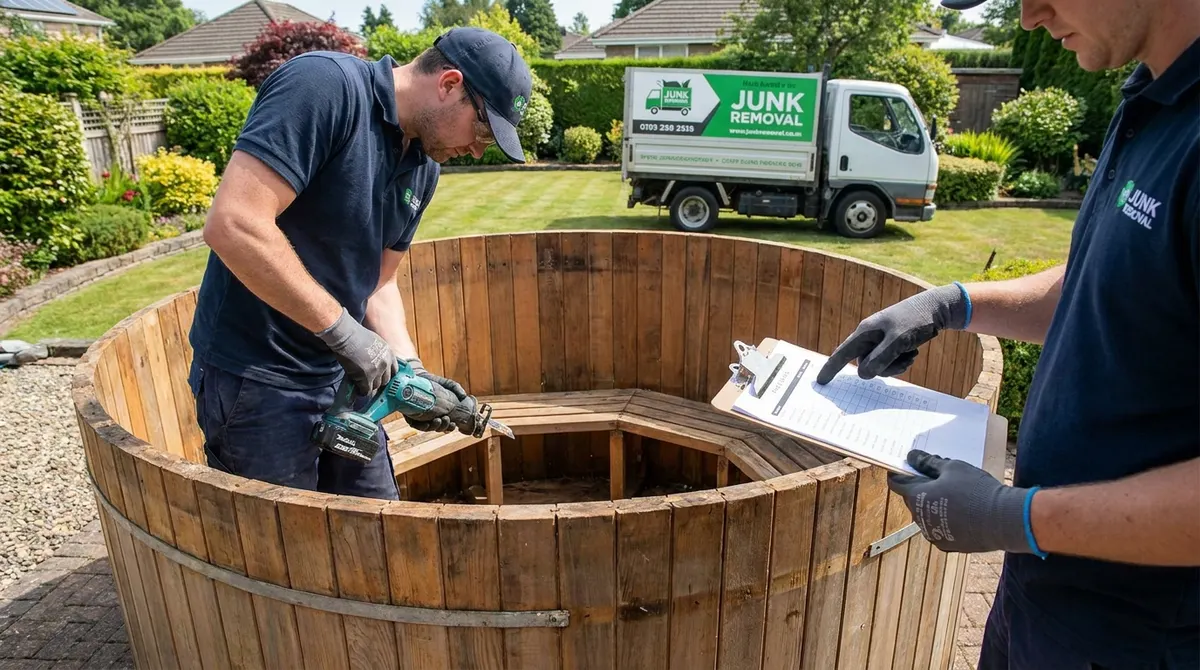
Hot tub removal generally runs $350 to $800 for an above-ground spa and more for swim spas or tight access. Our crew handles the draining, cutting, and hauling — including the debris — and confirms the exact local price on a free on-site look.
| Spa type / situation | Typical cost range | Crew time & notes |
|---|---|---|
| Small 2–4 person above-ground spa, open access | $350 – $500 | 2 hours, 2 crew; shell cut into 4–6 panels |
| Standard 5–7 person acrylic spa, gate or side-yard access | $450 – $800 | 2–4 hours; ¼ to ½ truckload of debris |
| Spa surrounded by a wood deck (deck removal included) | $700 – $1,400 | Deck demolition billed on top of the spa itself |
| Built-in / recessed spa in a concrete pad or gazebo | $900 – $1,800 | Framing, skirting, and coping often come out too |
| Swim spa or oversized 12'+ unit | $1,000 – $2,200 | Larger volume; sometimes 2 trips or extra crew |
| Crane or fence-panel removal required | Add $300 – $1,000+ | Third-party equipment or temporary fence removal |
| Tub still full of water | Add $0 – $100 | Pump time; drain-out is usually included when scheduled ahead |
Hot tub removal cost by spa type — typical market ranges (exact price confirmed on site)
Hot tub removal is a demolition job, not a furniture pickup
A hot tub is not lifted onto a truck intact in most cases. A filled 6-person spa holds 400 to 500 gallons of water, which weighs roughly 3,300 to 4,200 pounds, and even drained the unit weighs 600 to 900 pounds with its cabinet, frame, pumps, and insulating foam. Because of that, crews cut the acrylic shell and fiberglass understructure into sections that two people can carry through a standard 36-inch gate. That is why hot tub pricing sits above ordinary junk removal line items: the cost covers demolition labor, tool wear, and the debris volume the pieces occupy in the truck.
Hot tub removal follows a four-stage process: drain, disconnect, cut, haul
Stage one is draining — a submersible pump empties the shell in 20 to 45 minutes, or the homeowner can drain it the day before to shorten the job. Stage two is cutting power at the 220V GFCI disconnect box and separating the spa-side wiring so nothing is live. Stage three is sawzall demolition: the cabinet panels come off, the shell is scored and cut into panels, and the pump, heater, and plumbing manifold are pulled out separately. Stage four is loading and disposal, where the rigid foam and acrylic take up more truck space than their weight suggests. Most above-ground jobs finish in one visit the same day.
Hot tub removal pricing is driven by size, access, deck work, and electrical
Four variables explain nearly every price difference between quotes. Size sets the baseline debris volume — a 4-person spa fills a fraction of a truck while a swim spa can fill most of one. Access is the biggest swing factor: a tub 15 feet from the driveway costs far less than one behind a locked gate, up a flight of stairs, or on a second-story balcony. Deck removal is priced separately because it is its own demolition scope with its own debris volume. Electrical disconnection adds time and, in some cases, an electrician. Photos of the tub, the path out, and the disconnect box let a company quote accurately before arriving.
Hot tub electrical disconnect and permits depend on the wiring and the municipality
Most spas run on a dedicated 220V circuit ending at an exterior GFCI disconnect box within sight of the tub. Junk removal crews routinely cut the spa-side conductors at that box and cap them so the tub can be demolished safely. Permanent removal of the circuit, the disconnect box, or the breaker is electrical work and is generally handled by a licensed electrician, typically a short service call. Demolition permits are rarely required for an above-ground spa, but built-in units tied to a structure, a gazebo, or a pool deck sometimes fall under local building rules. Homeowners in an HOA should also check whether debris staging or dumpster placement needs approval.
Above-ground spa, built-in spa, and swim spa each remove differently
An above-ground acrylic spa sitting on a concrete pad or pavers is the simplest and cheapest scenario, and the pad usually stays. A built-in or recessed spa is more expensive because the shell is tied into decking, tile, coping, or framing that has to come apart first, and the resulting cavity is left open unless separate fill work is arranged. A swim spa is the largest category — often 12 to 19 feet long with a heavier steel or composite frame — so it takes more cutting, more crew, and more truck volume. Fiberglass swim spa shells in particular resist cutting and lengthen the job.
Selling or donating a working hot tub is realistic only when it truly runs
A spa that heats, holds water, and has intact jets can sometimes be moved instead of demolished. A free Facebook Marketplace listing with clear photos, the model, and the words "you move it" occasionally finds a taker, and spa movers charge roughly $250 to $600 to relocate a working unit. The honest limitation: tubs with a cracked shell, a dead pump, waterlogged foam, or 15-plus years of age rarely attract anyone, and most listings sit while the yard stays unusable. When the tub is dead or the listing goes nowhere, professional demolition and haul-away is the path that actually clears the space — see the full junk removal service page for how the same crew handles the debris.
Hot tub removal concerns raised in r/junkremoval and r/hottub threads
A recurring theme paraphrased from r/junkremoval: homeowners are surprised that a quote for a hot tub is several times a mattress or couch pickup, and companies in those threads point out the difference is demolition labor plus the volume the cut foam and shell occupy. Paired spec fact: a drained 7-person spa yields roughly a quarter to a half truckload of bulky, low-density debris. A second concern paraphrased from r/hottub: DIYers who start cutting with a circular saw report acrylic dust, fiberglass splinters, and a job that stretches across a weekend. Crews doing it daily budget 2 to 4 hours for the same tub with reciprocating saws and two sets of hands.