How Do You Dispose of an Old Refrigerator? — Complete Guide
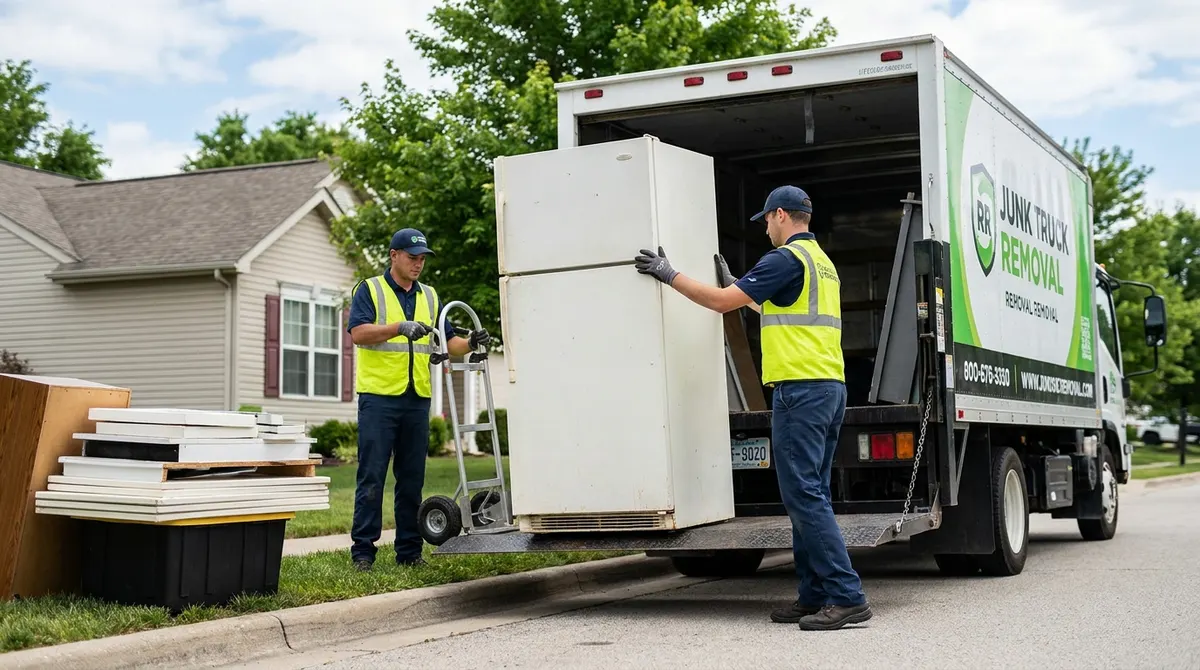
Refrigerator disposal is a licensed-refrigerant job, not a curbside job — expect $95 to $200 for a full-service pickup that includes the lifting. Our crews disconnect, door-strip, and haul the unit to a certified appliance recycler, with same-day slots open across the local service area.
| Disposal route | Typical cost and timeline |
|---|---|
| Full-service junk removal pickup (crew does the lifting) | $95–$200 per unit; often same-day or next-day; includes stairs, doorways, and recycling drop-off |
| Municipal bulk or special-appliance collection | $20–$60 appliance tag or surcharge; scheduled window, commonly 1–4 weeks out; homeowner must move it to the curb |
| Self-haul to a transfer station or scrap yard | $15–$45 appliance/refrigerant fee plus fuel; requires a truck, two people, and a documented refrigerant recovery in many facilities |
| Utility appliance recycling program (working units only) | $0 plus a $30–$75 rebate in some markets; typically limited to operating fridges of a set size, with waitlists |
| Retailer haul-away with a new appliance delivery | $25–$50 add-on; only on the delivery date, and usually one-for-one |
| Mini-fridge, wine cooler, or freezer chest | $65–$135; same refrigerant handling rules apply regardless of size |
Old refrigerator disposal routes, typical cost, and realistic timeline
Refrigerator disposal requires certified refrigerant recovery before the unit is scrapped
Every household refrigerator contains refrigerant — older units use R-12 or R-134a, newer units often use R-600a isobutane — plus oil in the compressor and blowing agents in the foam insulation. Federal Clean Air Act Section 608 rules make it illegal to knowingly vent that refrigerant during appliance disposal, and recovery must be performed by a certified technician using approved equipment. That single rule is why a refrigerator cannot be left at the curb with regular trash and why most landfill scales turn away sealed units. Full-service haulers solve this by routing appliances to a recycler that documents recovery, then recovers the steel, aluminum, and copper. Homeowners keep no paperwork obligation when a hauler handles the chain of custody.
Refrigerator pickup pricing runs $95 to $200 for most single-unit removals
A single-refrigerator pickup generally prices between $95 and $200, and side-by-side or French-door units at the top of that band because they run 250–350 pounds. Pricing reflects three variables: the appliance recycling fee the yard charges, crew time, and access. A garage or first-floor kitchen is the cheapest scenario. A finished basement with a switchback stairway, a second-floor apartment walk-up, or a doorway narrower than the fridge adds labor and can push a job past $200. Adding a second appliance in the same trip — a freezer, washer, or dishwasher — usually costs less per item than two separate visits. These figures are market ranges; the exact number gets confirmed in writing during a free on-site look before any work starts.
Refrigerator doors and shelves come off before transport to prevent child entrapment
Doors are removed or secured before an old refrigerator moves, and glass shelves and crisper drawers come out separately. The reason is entrapment: a discarded fridge sitting with a latching door is a documented child hazard, and many jurisdictions require doors off for any unit stored outdoors or awaiting collection. Removing the doors also drops 40–60 pounds off the carry and narrows the unit enough to clear a standard 30-inch interior doorway. Homeowners planning a self-haul should empty the fridge, defrost the freezer 24 hours ahead, and tape the power cord to the back so it does not catch on stair treads.
Old refrigerator recycling recovers roughly 120 pounds of metal from a standard unit
A standard top-freezer refrigerator yields about 120 pounds of recyclable steel, plus aluminum from the coils and copper from the compressor windings. Certified appliance recyclers also capture the refrigerant and the foam insulation blowing agents, which carry a far higher global-warming potential than the refrigerant itself. That is the practical argument for a recycler over a driveway scrapper: an uncertified pickup can mean the refrigerant is cut loose in a field and only the metal gets sold. Junk removal operators that weigh in at a permitted facility keep the appliance in a tracked stream and divert the bulk of it from the landfill.
Junk removal crews handle refrigerator disconnection, stairs, and same-day scheduling
Done-for-you appliance removal means the crew arrives with dollies, appliance straps, and floor protection, shuts the water line on an ice-maker model, unplugs the unit, breaks the doors down, and carries it out. Two-person teams are standard for refrigerators because a loaded stair carry with a 300-pound appliance is where injuries and drywall damage happen. Same-day and next-day windows are commonly available, which matters when a new fridge is being delivered and the old one has to clear the kitchen first. The removal is priced before the lift, not after, and the crew sweeps the footprint where the fridge sat.
Refrigerator disposal complaints on Reddit center on rejected loads and roadside scrappers
Threads in r/junkremoval repeatedly describe transfer stations refusing refrigerators at the gate because nobody could show the refrigerant had been recovered — the load gets driven home. That matches the Section 608 requirement and is the most common self-haul failure. Discussions in r/Appliances raise the second concern, paraphrased: a free roadside pickup takes the fridge for scrap value and the refrigerant simply disappears. A licensed hauler answers both by handling the recovery step through a certified appliance recycler and confirming the disposal fee in the quote instead of at the scale.