How Do You Get Rid of Old Furniture?
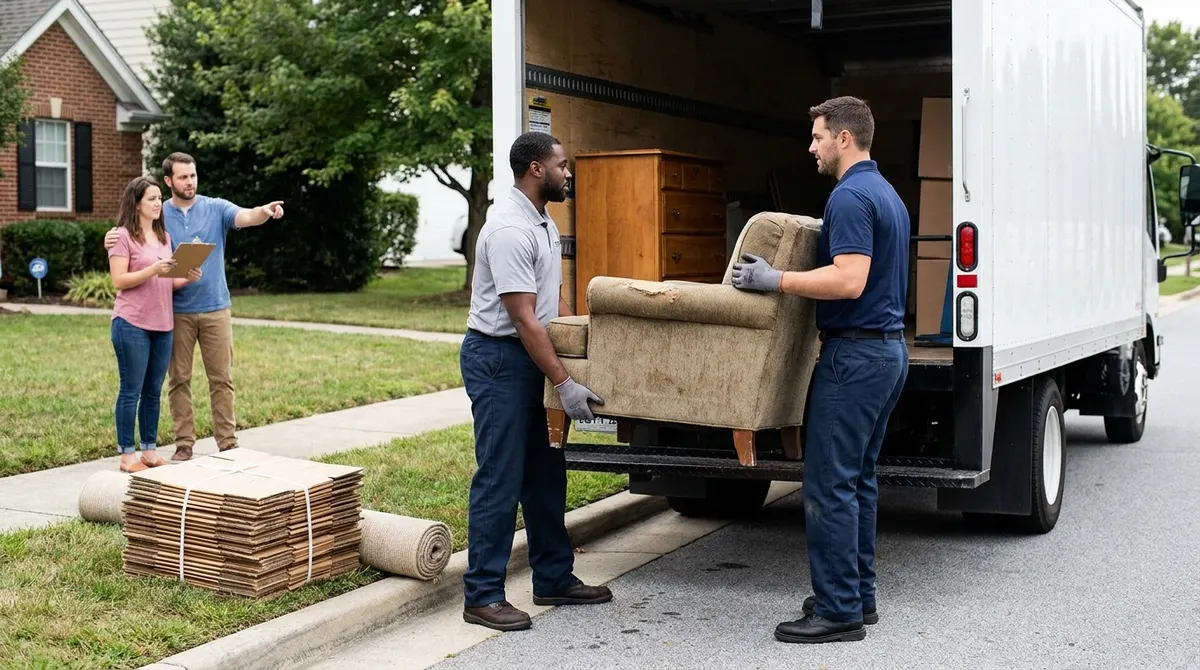
Old furniture leaves in one of four ways: paid pickup, city bulk collection, donation, or a self-haul dump run. {{brand}} handles the paid route in {{city}} — crews carry the piece out of the room it sits in, no curbside staging required.
| Furniture item or load size | Typical price range |
|---|---|
| Single recliner, armchair, or dresser | $95 – $150 |
| Sofa or loveseat | $120 – $200 |
| Sectional (3+ pieces) | $225 – $400 |
| Mattress and box spring set | $100 – $185 |
| Dining table with 4–6 chairs | $150 – $300 |
| Bedroom set (bed, dresser, nightstands) | $225 – $375 |
| Quarter truck load (small room of furniture) | $150 – $300 |
| Half truck load (large room or garage furniture) | $300 – $450 |
| Full truck load (whole-home furniture clear-out) | $500 – $800 |
| Stair carry, tight doorway, or disassembly | Often included; may add $25 – $75 |
Typical full-service old furniture removal price ranges (ballpark — exact price confirmed on a free on-site visit)
Old furniture removal is priced by truck space, not by the number of pieces
Junk removal companies price furniture loads by the volume the items occupy in a dump-body truck, measured in fractions — an eighth, a quarter, a half, or a full load. A standard junk removal truck holds roughly 12 to 20 cubic yards, which is why one bulky sectional can cost more than four small nightstands. Volume pricing means a soft, oversized couch often costs more to remove than a heavier but compact dresser. Labor, fuel, and disposal fees are folded into that single number. Reputable operators quote the load on site before anything is lifted, and the quote is free.
Municipal bulk-item curbside pickup accepts furniture only on scheduled days with item limits
Most residential trash programs include some form of bulk or large-item collection that accepts couches, chairs, tables, and dressers. Common restrictions apply across markets: a set number of items per pickup (often 2 to 4), placement at the curb by a specific hour, advance scheduling by phone or online form, and exclusions for anything that requires two people to move from inside the home. Bulk collection does not include entry into the house, basement, or upstairs bedroom. Homeowners who cannot get a 200-pound sleeper sofa down a flight of stairs are the reason paid pickup exists.
Donating old furniture works when the piece is structurally sound and free of stains, tears, and odor
Charity resale programs accept furniture that can be sold as-is: frames that are not broken, upholstery without rips, stains, or pet odor, and no signs of bed bugs or mold. Many donation centers decline mattresses, box springs, sleeper sofas, particleboard furniture that has been disassembled, and any piece with water damage. Free donation pickup is usually scheduled one to three weeks out and requires the item at ground level or just inside the door. Furniture that a donation center rejects at the curb becomes the homeowner's problem again the same afternoon — a common reason people book paid removal instead.
Mattress and box spring disposal follows separate rules from other old furniture
Mattresses are handled apart from general bulk waste in a growing number of areas. Some jurisdictions require mattresses to be sealed in plastic before curbside set-out, some charge a per-mattress disposal fee at the transfer station, and some route them to dedicated mattress recycling facilities that strip steel, foam, and wood for reuse. A mattress and box spring pair removed as part of a furniture pickup generally lands in the $100 to $185 range. Crews wrap or bag mattresses when they leave a bedroom to keep hallways and stair rails clean.
Same-day furniture pickup includes the lifting, stair carry, and removal from inside the room
Full-service furniture removal is a done-for-you job: a two-person crew arrives, walks the piece, confirms the price, then does the carry-out, disassembly if a frame will not clear a doorway, and cleanup of the space where the item sat. Same-day and next-day slots are common for single-item furniture pickups because they occupy a small share of the truck. Typical on-site time for one couch is 15 to 30 minutes. No curbside staging, no truck rental, no dump line, no lifting by the homeowner.
Old furniture that cannot be donated is sorted for recycling before it reaches the landfill
Furniture breaks down into recoverable streams: wood frames, steel springs and bed rails, foam, and metal hardware. Responsible haulers route usable pieces to thrift and reuse outlets first, send metal to scrap, and landfill only what has no other outlet — commonly stained upholstery and broken particleboard. Homeowners who want a specific piece donated rather than dumped should say so at the walkthrough so the crew loads it separately. Documentation of where a load went is available from most operators on request, which matters for estate and rental cleanouts.
Old furniture disposal complaints on Reddit center on surprise fees and no-show donation trucks
Threads in r/junkremoval repeatedly warn against phone quotes given sight-unseen, with posters describing prices that climbed once the crew saw the actual sectional. Paraphrasing the consensus there: get the number confirmed in person, in writing, before the first piece leaves the room — legitimate operators quote free on site. A recurring r/HomeImprovement frustration is booking a free charity pickup weeks out only to have the mattress or stained loveseat refused at the door. Donation programs decline mattresses and damaged upholstery as a standard policy, not as a one-off. Paid pickup takes both.
{{city}}, {{state}} specifics
Furniture removal in {{city}} is shaped by three local realities. First, curbside bulk collection is tied to the {{city}} residential trash schedule and typically caps how many large items go out per pickup day, so a full bedroom set usually spans multiple weeks at the curb. Second, older {{city}} housing stock — narrow stairwells, tight landings, and single-door basements — is the main driver of quotes landing at the upper end of the ranges above, because a sleeper sofa often has to be disassembled to clear the turn. Third, {{state}} transfer stations charge by weight or per-item for mattresses and upholstered goods, and those tipping fees are already built into a full-service price. Self-hauling means a truck rental, a scale ticket, and a round trip; a paid pickup consolidates all of it into one on-site number. Quotes across {{city}} are ballparks until a crew sees the piece and the path out — the on-site visit and the price confirmation are free.