Junk Removal vs DIY: Which Saves More?
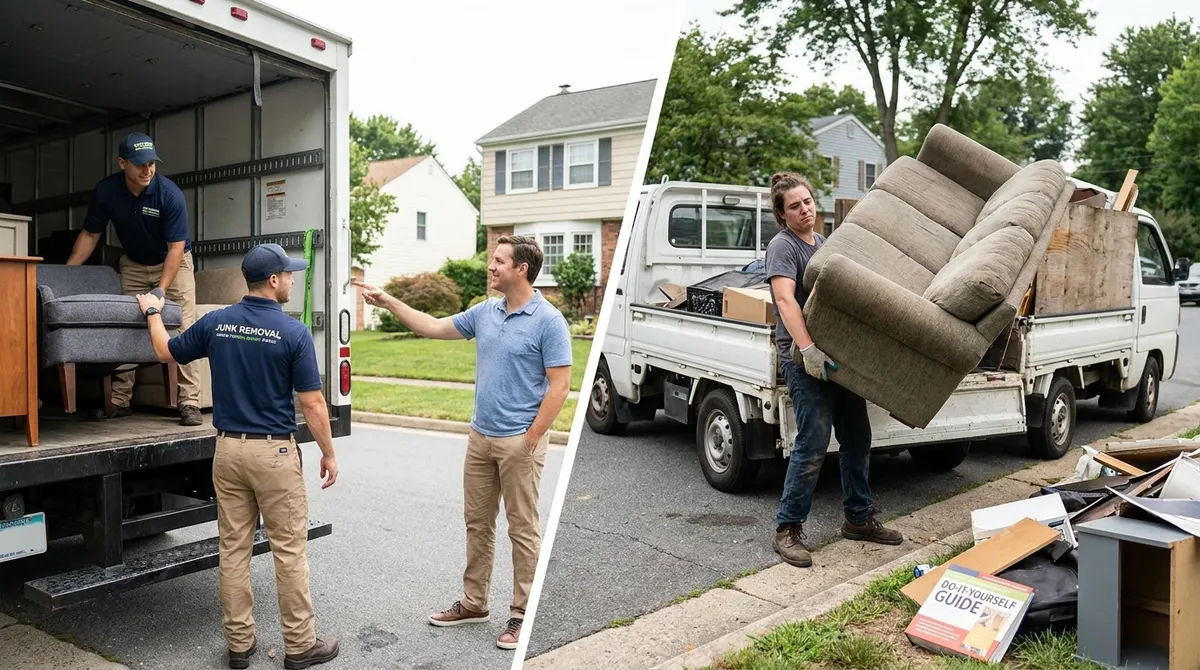
DIY hauling wins on one small light load; hired junk removal wins on volume, weight, and stairs. Junk Removal Pros gives a free on-site look at the pile, then a flat volume price — labor, loading, and disposal fees included, same-day slots when the schedule allows.
| Load size | Full-service junk removal (typical range) | DIY all-in (rental + fuel + dump fees) | Your time |
|---|---|---|---|
| 1 single item (chair, TV, small appliance) | $95–$175 | $50–$85 | 1–2 hours |
| Pickup-bed load of light items (boxes, bags, small furniture) | $150–$250 | $95–$160 | 2–4 hours |
| Quarter truckload (~4 cubic yards) | $175–$275 | $110–$190, usually 1–2 trips | 3–5 hours |
| Half truckload (~8 cubic yards) | $300–$450 | $180–$300, 2–3 trips | 5–7 hours |
| Full truckload (~15–16 cubic yards) | $550–$800 | $260–$420, 3–4 trips | 8–12 hours |
| Mattress or box spring (each) | Included in load price | $15–$40 surcharge each at most facilities | — |
| Refrigerator or freezer (refrigerant) | Included in load price | $20–$50 handling fee plus certified drop-off | 1–2 hours |
Junk removal vs. DIY hauling: typical all-in cost and time by load size (market ranges — exact price confirmed on a free on-site visit)
Junk removal is priced by truck volume, not by the hour
Full-service junk removal is quoted by how much space the load fills in the truck, measured in fractions of a 15–16 cubic yard bed. A quarter load typically runs $175–$275 and a full load $550–$800 in most markets. That flat volume price already includes two-person labor, carry-out from a basement or second floor, the drive to the transfer station, and the tipping fee at the scale house. Because the price is set before loading starts, the number does not climb if the sofa fights the stairwell or if the crew needs an extra hour.
DIY hauling costs more than the truck rental rate suggests once tipping fees land
The advertised $19.95 pickup rental is a base rate, not a total. DIY hauling adds mileage at roughly $0.79–$1.29 per mile, fuel on a vehicle getting 12–16 mpg loaded, and a landfill or transfer-station charge of about $40–$85 per ton with a $20–$40 minimum per visit. Mattresses commonly carry a $15–$40 surcharge each, and appliances with refrigerant add $20–$50. Two trips double the mileage and can double the minimum disposal charge. A load that looked like a $25 job frequently settles between $150 and $300.
Junk removal saves more on heavy loads: appliances, mattresses, and construction debris
Weight is where DIY math breaks. Plaster, tile, shingles, dirt, and concrete are billed by the ton at disposal, and a half-full pickup bed of demolition debris can exceed the vehicle's payload rating before the bed looks full. Hired junk removal absorbs the weight risk inside the volume price and brings the right number of hands for a 300-pound armoire or a chest freezer. One old refrigerator, one mattress, and a broken treadmill together often price out around $250–$400 with a crew — close to the DIY total once rental, fuel, surcharges, and a strained back are counted.
DIY hauling still wins on one light load a person can lift alone
Honest answer: if the job is four bags of yard waste and a folding table, and a truck or trailer is already available, DIY is cheaper — often $50–$85 all in. The break-even sits at roughly a quarter truckload. Past that point, or the moment the pile includes stairs, a two-person lift, or a second trip, hired junk removal usually costs the same or less than DIY once time is valued at $25–$40 per hour. For a garage, estate cleanout, or post-renovation pile, a booked crew and a single flat price is the practical option.
Junk removal folds disposal sorting and recycling routing into one price
Transfer stations charge differently by material, and mixed loads are often assessed at the highest applicable rate. Electronics, tires, paint, batteries, and refrigerant-bearing appliances are usually refused at the general municipal solid waste pile and require a separate facility, separate hours, and separate fees. A junk removal crew sorts on the truck and routes metal, cardboard, and usable furniture to recyclers or donation partners, then takes the remainder to the correct disposal point. DIY hauling means researching each material, checking facility hours, and sometimes making three drop-offs for one pile.