How Do You Clear Out a Hoarding Situation Safely? — Complete Guide
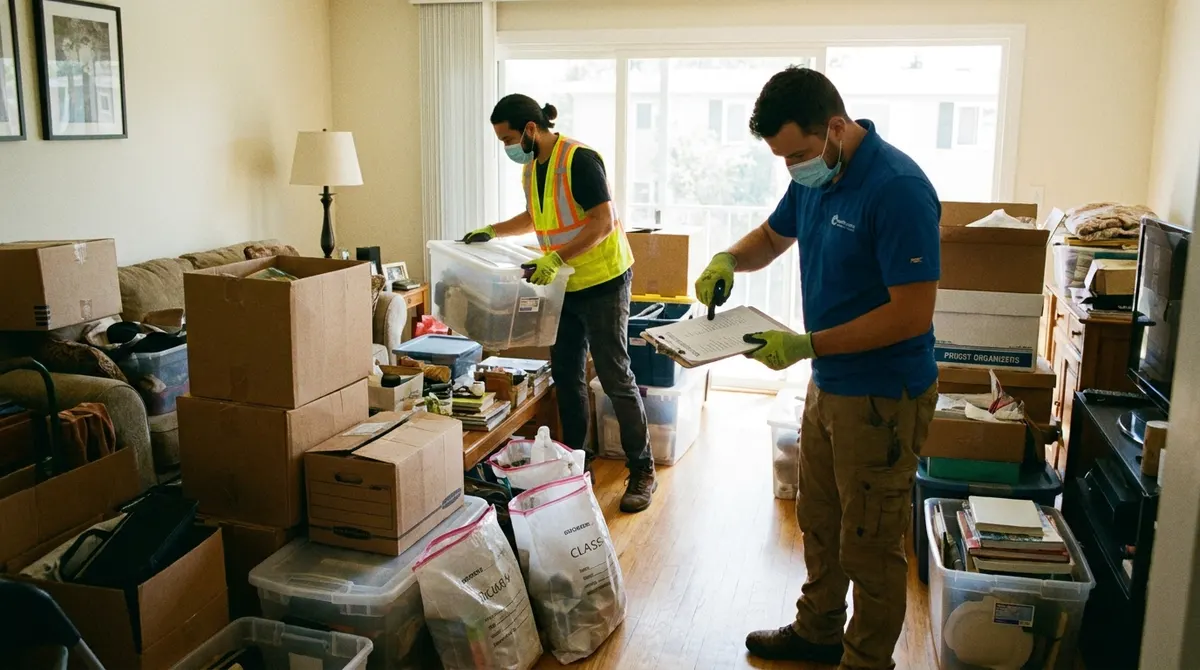
Hoarding situations clear safely through PPE, staged room-by-room removal, and biohazard-aware disposal — not a weekend family push. Our crew does the lifting, sorting, and hauling for local homeowners and landlords, gives a ballpark range up front, and confirms exact scope on a free on-site walkthrough.
| Condition level | What crews typically find | Crew size & time | Typical cost range |
|---|---|---|---|
| Level 1–2 (heavy clutter, clear paths) | Excess furniture, boxes, bagged clothing; no waste or pest issues | 2 techs, 4–8 hours | $500–$1,500 |
| Level 3 (blocked rooms, some odor) | Narrow pathways, one unusable room, expired food, light mold on cardboard | 2–3 techs, 1–2 days | $1,200–$3,500 |
| Level 4 (structural and sanitation concerns) | Rodent droppings, pet waste, non-working plumbing or appliances, sagging floors | 3–5 techs, 2–3 days | $3,000–$7,500 |
| Level 5 (severe biohazard) | Human waste, standing water, dense mold, infestation, unsafe egress | 4–6 techs plus specialty subcontractors, 3–5+ days | $7,000–$20,000+ |
| Add-on disposal items | Mattresses, tires, freon appliances, paint, propane, electronics | Handled within the same haul | $25–$75 per item in most markets |
Hoarding cleanout scope by clutter level — market-range ballparks, confirmed on-site
Hoarding cleanout safety begins with a PPE and air-quality walkthrough before anything moves
A safe hoarding cleanout starts with a walkthrough, not with hauling. Crews check for visible mold, ammonia or sewage odor, rodent and insect activity, sharps, medications, firearms, and whether at least two exits are usable. Standard PPE for a hoarding cleanout includes an N95 or P100 respirator, cut-resistant gloves, sealed eye protection, coveralls, and closed boots. Airborne dust in a long-neglected home carries dried droppings, mold spores, and fiberglass, which is why open windows and box fans creating cross-ventilation are set up before the first bag is filled. Anything questionable — chemical containers, unlabeled liquids, oxygen tanks — gets flagged and handled separately rather than tossed into a general load.
Hoarding cleanups separate biohazard material from ordinary junk at the point of pickup
Biohazard material is bagged, sealed, and tracked apart from general debris. Pet urine-soaked carpet, feces, used needles, and food waste that has liquefied are handled with dedicated bags and, where conditions warrant, referred to licensed biohazard remediation. Mold covering roughly 10 square feet or more, or mold on structural framing, is typically outside general junk removal and belongs with a remediation specialist. A responsible crew states that boundary plainly instead of hauling contaminated drywall and calling it done. Ordinary junk — furniture, textiles, cardboard, appliances — continues to normal disposal channels, with donatable and recyclable items pulled where the condition of the goods allows.
Hoarding homes require a floor-load and structural check before crews stack or pile debris
Floor structure is verified before heavy staging begins. Dense paper, books, and canned goods stacked several feet deep can push well past the 40 pounds per square foot live load that many residential floors are designed for, and soft or springy spots near the center of a room signal joist or subfloor damage. Crews avoid creating a new concentrated pile in one spot and instead move material out in continuous small loads. Water-damaged bathrooms, second-floor rooms above garages, and attic accumulations get extra attention. Stairways are cleared first, in both directions, so nobody carries a loaded bag down a blocked stair — the single most common injury point on these jobs.
Hoarding cleanouts frequently uncover pest infestations that change the removal sequence
Pest activity changes the order of work. Roaches, bed bugs, fleas, and rodents travel out with the furniture, so infested upholstered items are wrapped or bagged in place before they cross the threshold. Bed bug-infested mattresses and sofas are sealed in plastic at the source so the infestation is not spread to the truck, the hallway, or a neighboring unit. In multi-unit buildings this step protects the adjacent tenants and the property owner. Where the infestation is active and widespread, treatment scheduled between clearing phases works better than a single pass — remove the harborage, treat, then finish. That sequencing gets discussed during the estimate rather than discovered mid-job.