Do You Tip Junk Removal Crews? — Complete Guide
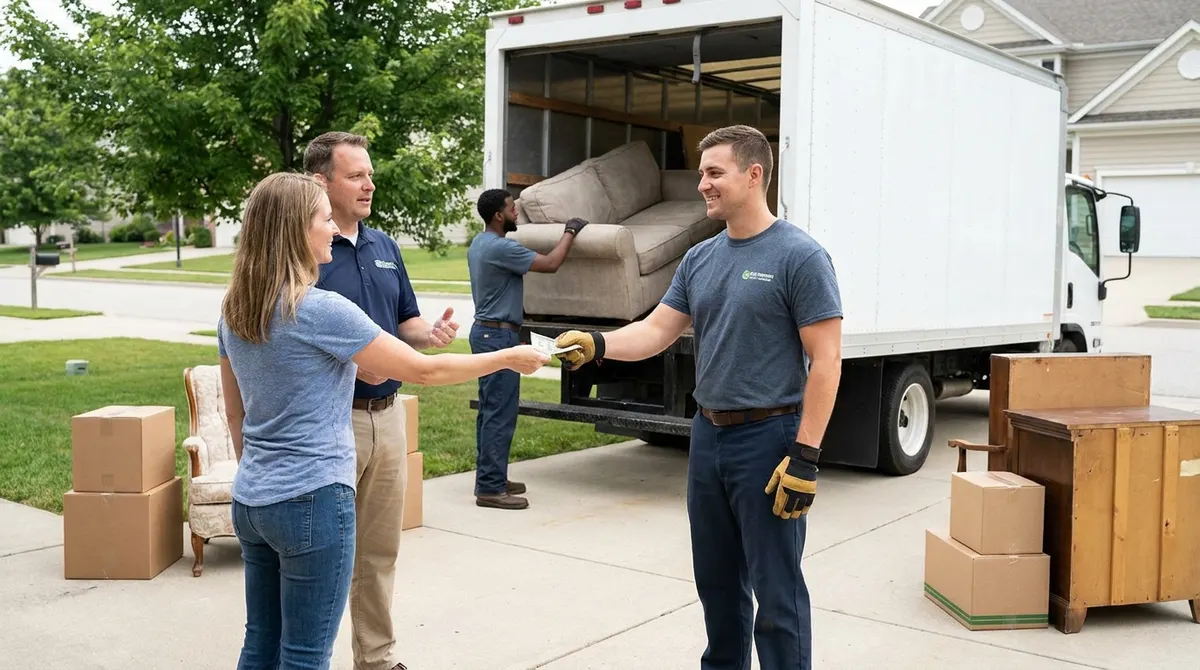
Tipping is optional because the quoted price already covers labor, hauling, and disposal. Local crews do all the lifting — out of basements, garages, and third-floor walk-ups — so a tip simply recognizes extra effort on a physically hard job.
| Job type | Typical job price range | Common tip per crew member |
|---|---|---|
| Single item (couch, mattress, appliance) | $75–$175 | $5–$10, or none |
| Quarter-truck load (small cleanout) | $150–$250 | $10–$20 |
| Half-truck load (garage or basement) | $300–$400 | $15–$25 |
| Full truck load (~15 cubic yards) | $500–$750 | $20–$40 |
| Stairs, long carry, or no elevator | Add-on to load price | $20–$40 |
| Heavy specialty item (piano, safe, hot tub) | $250–$700+ | $25–$50 |
| Full-property or estate cleanout (multi-hour) | $700–$2,000+ | 10–20% of total, split by crew |
Junk removal tipping norms by job type (market-range guidance, not a required fee)
Junk removal tip amounts most customers land on: $10–$20 per crew member
Most tipped junk removal jobs land between $10 and $20 per crew member. A two-person crew clearing a quarter truck therefore sees $20–$40 total. On larger loads and multi-hour cleanouts, many customers switch to a percentage instead: 10–20% of the job total, divided among the crew. Tipping is optional on every job, and crews are paid regardless. Cash is the simplest method, though many companies allow a tip to be added to a card payment or a digital invoice.
Junk removal crews are paid hourly or per job, so a tip is a bonus rather than a wage
Junk removal is not a tipped-wage trade. Crews are paid an hourly rate or a percentage of the job, unlike restaurant servers who depend on gratuity to reach minimum wage. Declining to tip does not shortchange anyone. That is the reason tipping etiquette here matches other in-home trades such as movers, appliance delivery drivers, and landscapers: appreciated on hard jobs, unremarkable when skipped.
Junk removal jobs with stairs, long carries, and heavy items justify the higher end of the tip range
Difficulty drives the tip more than the volume does. A third-floor walk-up sofa, a basement full of water-damaged boxes, a 400-pound safe, or a 60-foot carry from a back yard to a curbside truck all mean far more physical work than a driveway pickup of the same size. On those jobs, customers commonly move to $20–$40 per crew member. Summer heat, winter ice on walkways, and rain-soaked debris are also frequent reasons customers tip on the higher end.
Junk removal pricing already includes labor, truck time, fuel, and landfill disposal fees
A junk removal quote is all-in: two or more workers, the truck, fuel, loading labor, sorting, and the disposal or transfer-station charge at the end. Landfill and transfer facilities generally charge haulers by weight, often in the $40–$90 per ton range depending on the facility and material, and that cost is built into the price. Mattresses, tires, appliances with refrigerant, and electronics frequently carry separate per-item recycling fees. Because the quote already covers the labor, no tip is needed for a fair job — the crew is not working for gratuity.
Junk removal crews value a five-star review and cold drinks nearly as much as cash
Non-cash appreciation carries real weight in this trade. A named review mentioning the crew, bottled water or sports drinks on a hot day, a clear parking spot reserved for the truck, and pets secured before arrival all make the job faster and safer. Referrals to neighbors matter most of all, since word-of-mouth drives a large share of residential hauling work. These cost nothing and are welcomed on every job.
Junk removal quotes are confirmed on site before any loading starts, so the total is never a surprise
Pricing is based on the volume the load occupies in the truck, plus difficulty of access and any special-disposal items. Phone and photo estimates are honest ballparks; the exact number is confirmed in person, on site, at no charge, before a single item is lifted. Customers approve that figure first, then the crew loads, sweeps the area, and hauls everything away the same visit. Same-day and next-day slots are commonly available for standard residential loads. This is a done-for-you service — the crew handles all the lifting, stairs, and disposal runs, so no dumpster rental, borrowed truck, or weekend of hauling is required.
Junk removal tipping discussions on Reddit consistently describe it as optional but common on hard jobs
Homeowners in r/junkremoval and r/moving threads paraphrase the same consensus: nobody is offended by a skipped tip, but $20 handed to a two-person crew after a brutal basement or attic clearout gets remembered. Several posters also note that crews appreciate being told about stairs, narrow doorways, or a heavy safe in advance rather than at the door. That advance detail matters practically, since access difficulty is one of the factors that adjusts the on-site price, and an accurate description up front keeps the confirmed quote close to the original estimate.