How Do You Prepare for a Junk Removal Pickup? — Complete Guide
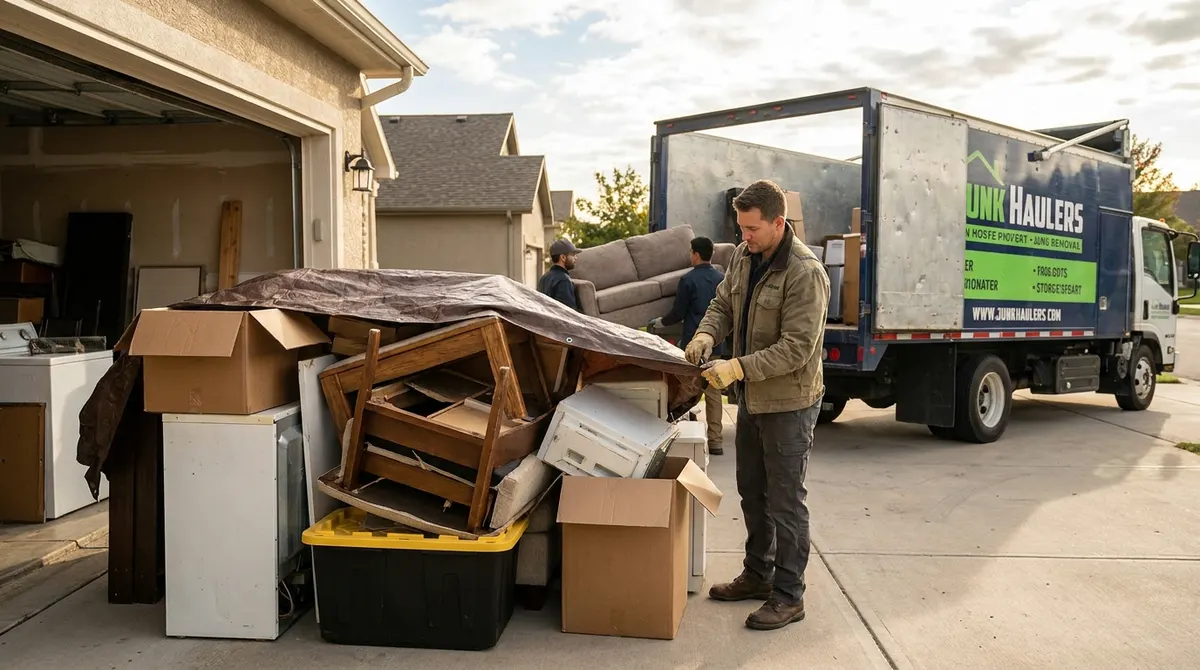
Preparation is short: pile items together, clear the path, and flag parking. Our crews do the lifting, carrying and loading, so nothing has to be moved to the curb first. Local access, alley width and disposal rules shape the final quote.
| Prep step | Time and what it affects |
|---|---|
| Group items in one spot (garage, driveway, one room) | 10–20 min. Cuts crew time and keeps the volume estimate accurate. |
| Separate anything that is staying | 5 min. Prevents the single most common mistake — items loaded by accident. |
| Clear a 30–36 inch walking path to the door | 5–10 min. Protects walls and floors and speeds loading. |
| Reserve or note truck parking within ~75 ft of the door | 5 min. Long carries add labor time to volume-based jobs. |
| Pull out paint, fuel, propane, tires and chemicals | 5 min. These are restricted or surcharged at most transfer stations. |
| Empty drawers, cabinets and appliance interiors | 10–15 min. Loose contents add volume and can shift in the truck. |
| Unplug and defrost refrigerators or freezers 24 hrs ahead | 24 hrs lead time. Sealed-unit appliances need separate handling. |
| Photograph the pile and text it in advance | 2 min. Gives a ballpark range before the crew arrives. |
Junk removal prep checklist: what each step affects
Junk removal prep begins with grouping every item into one accessible spot
The single highest-value prep step is consolidation. Crews quote and load by truck volume, so a pile staged in a garage bay, on a driveway, or in one corner of a room loads faster than the same items scattered across three floors. Items do not need to reach the curb — full-service junk removal includes carrying from basements, attics, sheds and second-story bedrooms. Consolidation simply removes walking time from the job. Households that stage the pile the night before typically shorten a two-hour appointment to under an hour.
Junk removal crews need a clear path measuring at least 30 inches from pile to truck
A dresser, sleeper sofa or chest freezer needs roughly 30 to 36 inches of clear width to travel without contacting door casings or railings. Move shoes, planters, bikes and pet gates off the route. Prop open storm doors and unlock gates, and salt or shovel exterior steps in cold weather. Rugs and runners at doorways are worth rolling up — they slide under loaded weight. Where a hallway turn is tight, pointing it out at the walkthrough lets the crew choose a different exit rather than force the piece.
Junk removal pricing is volume-based, so sorting before pickup directly lowers the quote
Volume is the billing unit, not weight, for most residential jobs. Breaking down flat-pack furniture, collapsing cardboard boxes, and stacking loose items instead of leaving them in a mound can move a pile from a half load to a quarter load. Removing genuinely donatable or resellable items first also reduces the paid volume. Bagged household trash, yard debris and construction material are usually quoted separately from furniture because disposal fees differ by material. Quotes are ballparks until a crew sees the pile; the exact figure is set on-site during a free on-site estimate, before any loading.
Junk removal companies cannot load a short list of restricted materials
Pull these out before pickup day: liquid paint, motor oil, gasoline, solvents, pesticides, propane tanks, car batteries, asbestos-containing material, and medical or biohazard waste. Most transfer stations reject them or surcharge them heavily. Latex paint can often be dried out with cat litter or hardener and then handled as solid waste. Tires, mattresses, refrigerant-bearing appliances and electronics are usually accepted but carry per-item disposal fees, so mention them when booking. Ammunition and fireworks are always excluded. Naming borderline items on the phone prevents a partial pickup and a second trip.
Junk removal appointments run fastest when parking and access are settled before arrival
A standard junk removal truck is roughly 12 to 16 feet long and 8 to 11 feet tall with the load, so low garage soffits, tree limbs, tight alleys and overhead wires matter. Confirm the truck can get within about 75 feet of the door; longer carries add labor time. Apartment and condo residents should reserve the service elevator and loading dock, since many buildings limit moving hours to weekday mid-days. Gate codes, buzzer numbers and a callback number should be given at booking so the crew is not idling outside.
Junk removal customers on Reddit flag two prep issues worth handling in advance
Discussions in r/junkremoval repeatedly make the same point, paraphrased: final price is volume-based and cannot be locked in sight-unseen, so a photo sent ahead of time gets a realistic bracket instead of a guess. A second recurring concern in those threads is surprise fees — which almost always trace to items with separate disposal costs. Both are prep problems, not pricing tricks: photograph the pile, and list mattresses, tires, TVs, paint and appliances when booking. Disclosed up front, those items are quoted into the number rather than added at the truck.
Junk removal on the same day is possible when the pile is staged and access is open
Same-day and next-day windows are common for residential loads because staged, ground-accessible piles are quick to assess and load. Calls placed in the morning have the best odds of a same-day slot. Booking is faster with three details ready: an approximate item count or a photo, the location of the items in the home, and any restricted or fee-bearing items. Estate cleanouts, garage cleanouts, hoarding situations and post-renovation debris usually need a walkthrough first — see the main junk removal service page for how those larger jobs are scoped.