What Size Dumpster Do I Need for My Project? — Complete Guide
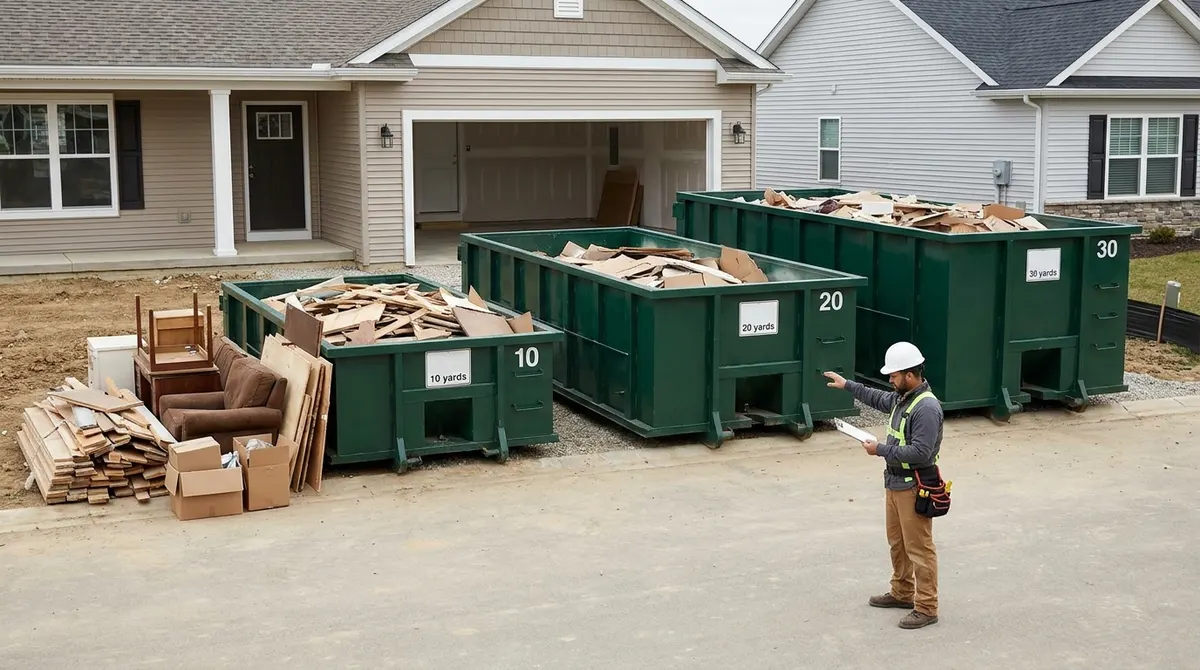
Pick a 10-yard for heavy or single-room debris, a 20-yard for whole-home cleanouts, and 30 to 40-yard for construction. When the loading is the problem, our crew brings the truck and the labor instead of a container.
| Dumpster size | Best-fit project | Capacity / typical weight allowance | Typical 7-day price range |
|---|---|---|---|
| 10-yard | One room, small bath remodel, concrete, dirt, roofing tear-off | About 3 pickup loads; 1–2 tons | $250–$450 |
| 15-yard | Garage, basement or attic clearout, flooring removal | About 4–5 pickup loads; 2–3 tons | $300–$500 |
| 20-yard | Whole-home cleanout, kitchen remodel, deck teardown, large yard debris | About 6 pickup loads; 3–4 tons | $350–$600 |
| 30-yard | Major renovation, estate cleanout, new construction framing waste | About 9 pickup loads; 4–5 tons | $450–$750 |
| 40-yard | Commercial demolition, large-scale construction, multi-unit turnover | About 12 pickup loads; 5–6 tons | $550–$900 |
| Junk removal truck (no container) | Furniture, appliances, mixed household junk, hoarding cleanouts | Priced by fraction of truck; crew loads everything | $150–$700 |
Dumpster size by project type, capacity and typical rental price range
Dumpster sizing follows debris volume and weight, not the size of the house
Dumpster size is measured in cubic yards of volume, and every container also carries a weight allowance in tons. A 10-yard dumpster holds roughly 10 cubic yards of material, or about three full pickup truck loads. Two projects can produce the same volume with very different weight: a bedroom of furniture and boxes fills 15 yards but weighs under a ton, while 10 yards of broken concrete can exceed 4 tons. Heavy materials like concrete, brick, dirt, shingles and tile belong in the smallest container available, because weight overages cost more than extra yardage. Light bulky items, such as sofas, mattresses and cardboard, need volume rather than tonnage.
A 10-yard dumpster handles single-room cleanouts and heavy demolition debris
A 10-yard dumpster measures roughly 12 feet long, 8 feet wide and 3.5 feet tall, which means it fits on one side of a standard two-car driveway. It is the correct choice for a single-room cleanout, a small bathroom gut, a roof tear-off up to about 1,500 square feet, or any load of concrete, asphalt, dirt or rock. Low walls make it easy to load without a walk-up ramp. Typical local rental pricing runs about $250 to $450 for a 7-day period with a 1 to 2-ton allowance.
A 20-yard dumpster is the standard pick for whole-home cleanouts and remodels
The 20-yard dumpster is the most frequently rented residential size because it absorbs mixed household debris without hitting the weight cap. It typically measures about 22 feet long, 8 feet wide and 4.5 feet tall and holds roughly six pickup loads. It fits a full kitchen remodel, a deck or shed teardown, carpet and flooring from an entire house, or a garage plus basement clearout done in one weekend. Choosing a 20-yard over a 15-yard usually adds only $50 to $100, which is far cheaper than paying for a second haul.
30 and 40-yard dumpsters serve construction, additions and commercial volume
A 30-yard dumpster suits major renovations, large estate cleanouts and new-construction framing waste, holding about nine pickup loads with tall walls that require a ramp or a boom for heavy items. A 40-yard dumpster is a commercial-scale container used for demolition, roofing on large structures, and multi-unit property turnovers. Both need substantial placement space — roughly 60 feet of straight clearance for the delivery truck and 23 feet of overhead clearance. Residential driveways rarely support a loaded 40-yard container, so street placement and a municipal permit are often required.
Dumpster weight limits, not yardage, cause most surprise charges
Every rental includes a tonnage allowance, and overage fees commonly run about $50 to $125 per additional ton. A dumpster loaded level with the rim is legal to haul; a dumpster heaped above the rim is not, and the driver can refuse pickup or charge a return trip. Prohibited items are consistent across most haulers: paint, motor oil, solvents, batteries, propane tanks, tires, refrigerant appliances and electronics in some jurisdictions. Separating heavy inert debris from light household junk into two loads is usually cheaper than one overweight container.
Junk removal replaces a dumpster when the project is sorting and lifting, not demolition
Dumpster rental makes sense when debris is generated over several days and someone is available to load it. Full-service junk removal makes sense when the items already exist and need to leave — furniture, appliances, garage contents, estate and rental-property cleanouts. A two-person crew arrives, gives a firm price on sight, carries everything out and sweeps up, typically in one to three hours. Pricing is by volume in the truck, generally $150 for a small load to about $700 for a full truck. No driveway is blocked for a week, no permit is needed, and the labor is included.
Dumpster placement requires driveway protection, clearance and permit checks
A dumpster needs a flat, firm surface, 60 feet of approach room for the roll-off truck, and clear overhead space free of tree limbs and power lines. Plywood under the rails protects asphalt and concrete from gouging and heat marks. Containers placed on a public street or right-of-way generally require a permit from the local public works department, and HOA rules may cap how many days a container can sit visible. Confirming placement rules before delivery day prevents relocation fees.