How Do You Dispose of Old Carpet? — Complete Guide
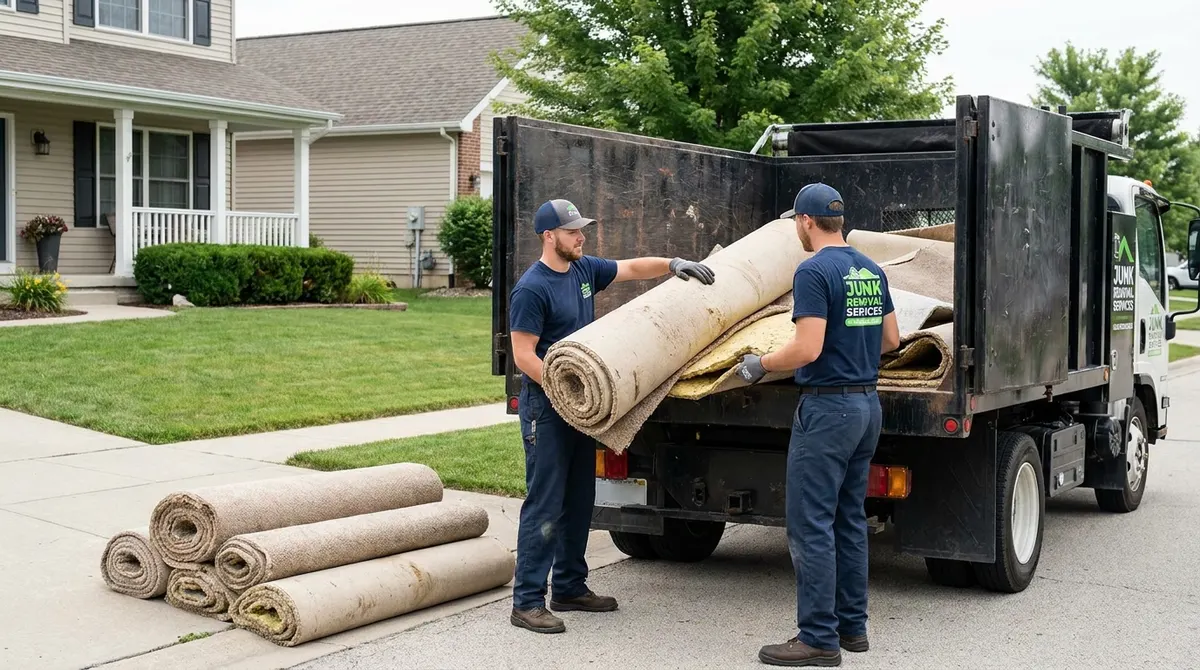
Old carpet is disposed of by cutting it into taped 4-foot rolls, then hauling it to a transfer station, recycler, or bulk-waste site. Our local crew does the cutting, carry-out, and disposal in one same-day visit, priced by truck volume.
| Carpet job size | Estimated weight and typical haul-off cost |
|---|---|
| One bedroom, about 12 x 12 ft (carpet + pad) | 110–160 lbs · $120–$200 |
| Two rooms plus a hallway | 250–350 lbs · $180–$275 |
| Full floor, about 1,000 sq ft | 500–700 lbs · $250–$350 |
| Whole house, about 2,000 sq ft | 1,000–1,400 lbs · $350–$450+ |
| Glue-down commercial carpet, 1,000 sq ft | 700–900 lbs (scraped backing adds weight) · $300–$425 |
| Water-damaged carpet and saturated pad | 2–3x dry weight · quoted on site after inspection |
Old carpet removal: typical volume, weight, and haul-off cost ranges
Old carpet disposal starts with cutting the material into taped 4-foot rolls
Carpet is cut from the back side with a utility knife along a chalk line, rolled tight, and secured with two or three wraps of duct tape or twine. Rolls of about **4 feet long and under 50 pounds** are the standard handling limit at most transfer stations and the practical limit for one person on stairs. Padding is torn out separately and bagged, because loose foam and rubber pad shed crumbs across floors and driveways. Tack strips come up with a pry bar and go into a rigid box or bucket, never a plastic bag, since the nails puncture through. A 12 x 15 ft room usually produces four to six carpet rolls plus two contractor bags of pad.
Carpet recycling accepts nylon and PET face fiber but rarely takes mixed padding
Carpet recycling exists, but access depends on the local recycler and the fiber type. Nylon 6, nylon 6,6, and PET polyester carpet have established recycling markets; polypropylene and older blended carpet often do not. California operates a statewide carpet stewardship program funded by a point-of-sale assessment, and the Carpet America Recovery Effort (CARE) publishes drop-off locations by state. Recyclers generally require **dry, clean carpet with no pad, tack strip, staples, or debris attached** — contaminated or mold-damaged carpet is refused. Because sorting and drop-off eat several hours, most homeowners recycle only during a planned remodel and send the rest to a permitted landfill.
Curbside bulk pickup limits carpet to a few bundled rolls per collection day
Municipal bulk-waste programs commonly accept carpet, but with strict limits: rolls tied or taped, cut to about 4 feet, weight under 50–60 pounds each, and typically **two to four items or a set cubic-yard cap per scheduled pickup**. That means a whole-house tear-out gets stretched across several collection cycles, with rolls sitting at the curb for weeks and absorbing rain. Many programs also require an appointment or a per-item fee, and crews will tag and leave non-compliant piles. Bulk pickup works well for one small room; it is a poor fit for anything larger or anything time-sensitive like a closing date or a new-flooring install.
Transfer station drop-off for carpet is charged by weight, usually $50–$90 per ton
Self-haul carpet disposal at a public transfer station or landfill is billed by scale weight, with typical tipping fees in the **$50–$90 per ton** range plus a minimum charge that often runs $20–$40 per load. Carpet is light per square foot but bulky, so a pickup bed fills long before it hits a ton — cost is driven by trips, not tonnage. Add fuel, a tarp, ratchet straps, weekday-only hours at many facilities, and the truck bed lined so staples do not shred the paint. Two or three round trips plus loading time is the realistic DIY total for a mid-size house.
Junk removal pricing for carpet is set by truck volume, not by square footage
Junk removal is quoted by how much space the load takes in the truck, in fractions such as an eighth, a quarter, or a half load, with disposal fees, labor, and stair carry already included. Single-room carpet jobs usually fall at or near the company minimum, roughly **$120–$200 in most markets**, while a whole-house tear-out sits in the $350–$450 band. Volume pricing is why bundling matters: adding the old couch, box spring, or subfloor scrap to a carpet load often costs less than booking two separate visits. Exact pricing is confirmed at the property before any work starts, so the number on the invoice matches the quote.