Appliance Removal Cost in DuPage County, IL — Pricing Guide
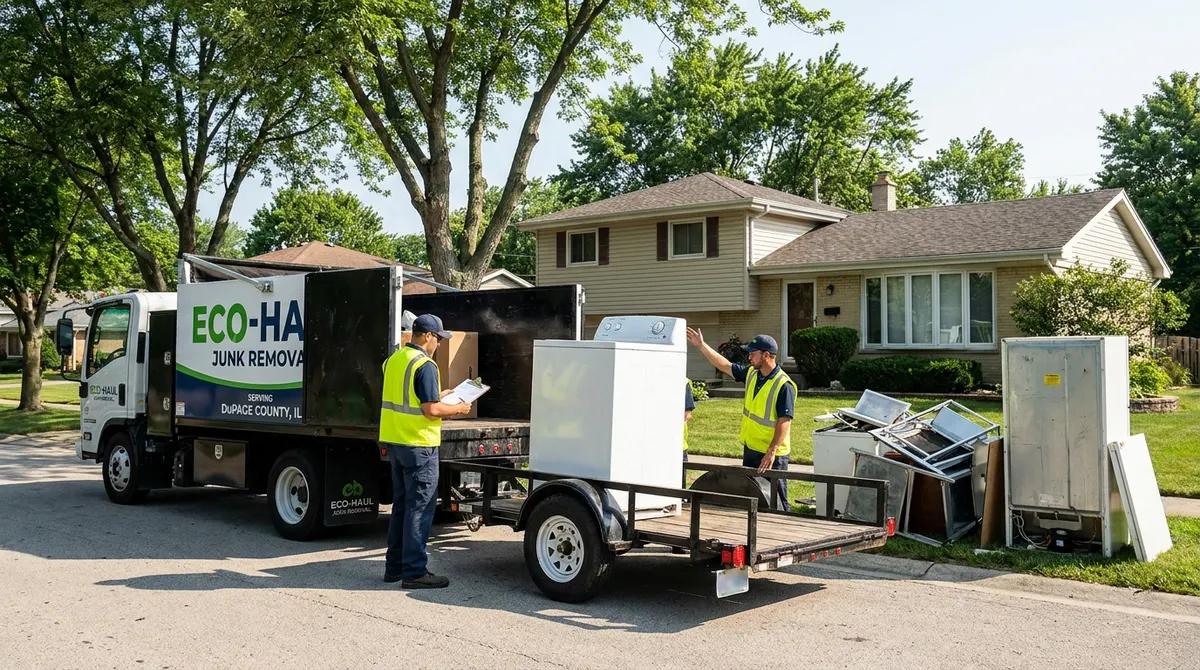
Appliance removal in DuPage County generally costs $75 to $225 per unit, plus $25 to $50 when refrigerant is involved. Our crew does the lifting, the stairs and the recycling run — from Naperville split-levels to Elmhurst basements — and confirms the number on site before anything moves.
| Appliance | Typical price range |
|---|---|
| Refrigerator (standard 18–22 cu ft) | $95–$185 + $25–$50 refrigerant recovery |
| Chest or upright freezer | $85–$165 + $25–$50 refrigerant recovery |
| Washing machine | $75–$140 |
| Dryer (electric or gas, already disconnected) | $75–$140 |
| Electric or gas range / stove | $80–$150 |
| Dishwasher (uninstalled) | $75–$135 |
| Water heater (40–50 gal, drained) | $85–$175 |
| Window air conditioner | $45–$90 + refrigerant fee |
| Each additional appliance, same trip | $50–$90 |
| Basement or second-floor carry-out | Add $25–$75 |
Typical appliance removal price ranges in DuPage County, IL (single-unit pickup, market ranges — confirmed on site)
Appliance removal pricing in DuPage County runs $75–$225 per unit depending on where the appliance sits
Two numbers set the price on an appliance pickup: weight class and travel path. A washer wheeled out of an attached Wheaton garage is a two-minute job and prices near the bottom of the range at $75 to $140. The same washer in a Glen Ellyn basement with a 30-inch doorway and a turn at the bottom of the stairs becomes a two-person carry and prices at $125 to $185. Full-size refrigerators are the heaviest common white good at 250 to 350 pounds and typically run $95 to $185 before refrigerant handling. Stacked laundry units, double-oven ranges and commercial-depth fridges price above the standard grid. Multiple appliances in one stop are the cheapest way to buy the service, because the truck, the drive and the recycling drop-off are already paid for — second and third units commonly fall to $50 to $90 each.
Refrigerant recovery adds $25–$50 to refrigerator, freezer and AC removal under EPA rules
Anything that cools contains refrigerant — R-134a in most household refrigerators built since the mid-1990s, R-600a isobutane in newer units, older R-12 in garage beer fridges. Federal EPA rules require that refrigerant be recovered by a certified technician before the shell is crushed or shredded, and the recycler charges for that step. Haulers pass it through as a $25 to $50 line item per cooling appliance. The same fee logic applies to window air conditioners, dehumidifiers and wine coolers. This surcharge is the single biggest reason a refrigerator quote looks higher than a dryer quote of identical size — the metal is worth the same, but the disposal is regulated. Ask any hauler to name the fee separately rather than folding it into a vague total; a legitimate operator will.
Illinois bans white goods from landfills, which is why appliances cannot go out with household garbage
Illinois law prohibits landfilling white goods — refrigerators, freezers, washers, dryers, ranges, dishwashers, water heaters and air conditioners. DuPage County transfer stations will not accept them mixed in with regular waste, and municipal haulers in towns like Lombard, Villa Park and Woodridge either refuse appliances outright or require a scheduled special pickup with a purchased sticker or bulk fee. That legal ban is why a $0 option effectively does not exist: every appliance has to reach a licensed scrap processor or recycler, and someone has to drive it there. Dumped appliances are also a code enforcement issue — a fridge left at a curb or in an alley for weeks in Addison or Bensenville can generate a village citation to the property owner, not to whoever abandoned it.
Scrap metal value on washers and water heaters offsets part of the price but rarely covers the trip
A washing machine holds roughly 40 to 70 pounds of recoverable steel; a 50-gallon water heater holds 80 to 120 pounds. At the scrap prices Chicago-area yards have typically paid for shred steel in recent years, that is a few dollars per unit — real money, but nowhere near the cost of a truck, fuel, insurance and two workers for 45 minutes. **Scrap value is a discount, not a payday.** Where scrap actually changes the math is volume: a landlord clearing eight units from a Downers Grove apartment building, or a contractor stripping a kitchen gut, gives a hauler enough tonnage that per-unit pricing drops noticeably. Working refrigerators, working freezers and clean stainless commercial equipment carry resale value above scrap, and that also pulls a quote down. Anyone quoting free pickup on a single non-working fridge is either running a metal route with no refrigerant handling or planning to bill on arrival.
Stairs, tight doorways and disconnects are the add-ons that move an appliance quote most
Basement stairs in DuPage County's postwar ranches and 1960s bi-levels are frequently 30 to 32 inches wide with a landing turn, which forces appliances to be tipped and walked rather than dollied. Expect **$25 to $75 added for stair carries**, more for a third-floor walk-up. Appliances must be disconnected before a removal crew arrives: water lines shut and drained, electric unplugged, dryer vent detached. Gas ranges, gas dryers and gas water heaters need the gas line capped by a licensed plumber or HVAC contractor — junk removal crews haul the appliance, they do not break gas unions. A drained water heater is standard; a full one is roughly 400 pounds of water and gets refused or rescheduled. Doors off hinges, railings removed and a cleared path all shave time, and time is what is being billed.