What Happens to Your Junk After It Is Removed? — Complete Guide
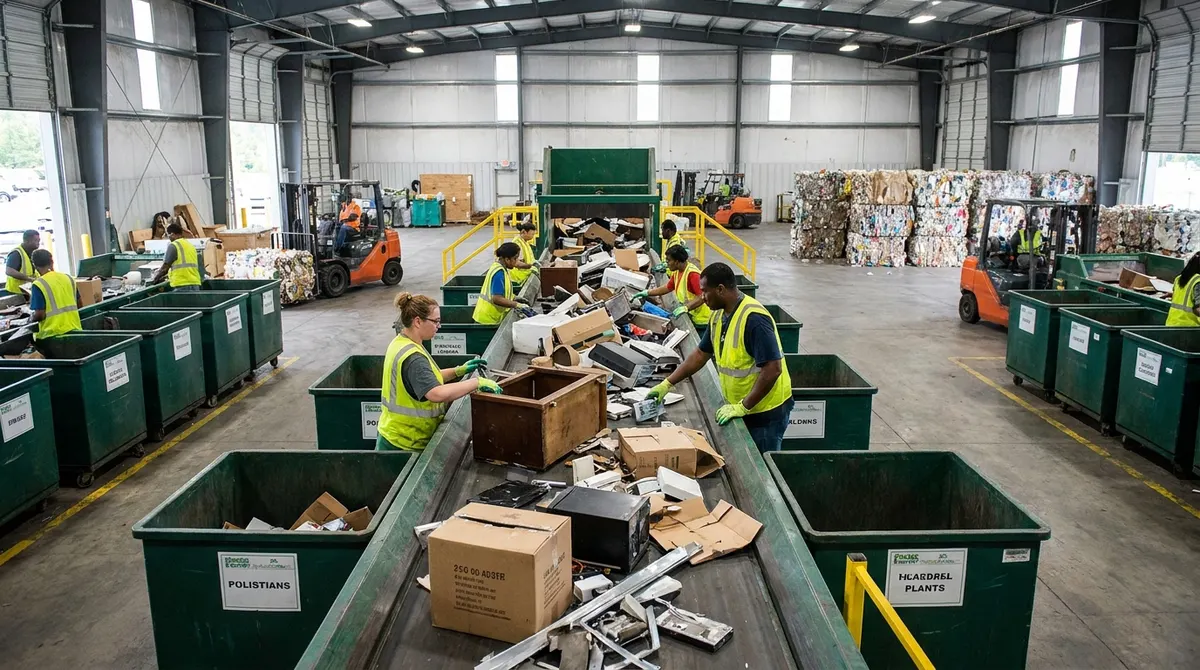
Junk does not go straight to a landfill. Loads are sorted into donation, recycling, and disposal streams, and {{brand}} routes {{city}} pickups through local scrap yards, e-waste processors, and county transfer stations depending on what the truck is carrying.
| Item or material | Typical destination after pickup |
|---|---|
| Sofas, dressers, tables in resale condition | Donation partners such as Habitat for Humanity ReStore, Goodwill, or Salvation Army |
| Appliances with refrigerant (fridges, freezers, AC units) | Certified recovery shop for refrigerant capture, then scrap metal |
| Washers, dryers, water heaters, metal bed frames | Scrap metal yard, sold by weight |
| TVs, monitors, computers, printers | Licensed e-waste recycler; many counties restrict CRT landfill disposal |
| Mattresses and box springs | Mattress recycling facility where available; otherwise landfill at a per-unit fee |
| Cardboard, clean paper, scrap wood | Recycling facility or wood grinding for mulch and biomass |
| Drywall, shingles, concrete, tile, lumber | Construction and demolition (C&D) recycling facility, billed by the ton |
| Yard waste, brush, branches | Composting or green-waste yard |
| Broken particleboard furniture, carpet, mixed household debris | Transfer station, then landfill; weighed on a scale at drop-off |
| Paint, motor oil, pesticides, propane tanks, tires | Household hazardous waste event or specialty collection site; not accepted on a standard truck |
Where each material type from a junk removal load typically ends up
Junk removal crews sort a load into three streams before it reaches a disposal site
A loaded truck makes more than one stop. Crews separate a load into donation-grade items, recyclable material, and non-recoverable debris, usually while loading at the curb rather than after. A dresser with all four drawers and no water damage rides on top for a donation drop-off. A dresser with a swollen, delaminated bottom panel gets loaded low because it is landfill-bound. Metal is stacked separately so it can be dropped at a scrap yard, where the truck is weighed in and weighed out. Most established operators report diverting somewhere between 20% and 60% of a typical household load away from the landfill, and the number swings hard depending on the job — a garage cleanout full of steel shelving and old bikes diverts far more than a post-flood basement full of soaked carpet and pressboard.
Furniture and household goods are donated only when they meet partner intake standards
Donation centers reject more than most people expect. Charity intake staff turn away upholstered furniture with stains, tears, pet odor, or any sign of bed bugs, and they refuse cribs and car seats that fall outside current safety standards. A sofa left on a covered porch for two weeks in {{city}} humidity is typically no longer donatable. Crews make that call at the curb because a rejected load costs a second trip. Items that clear intake produce a donation receipt, and homeowners can request one — the receipt comes from the charity, not the hauling company, and the deduction value is set by the donor's own valuation guide.
Appliances with refrigerant require certified recovery before the metal can be scrapped
Refrigerators, freezers, window air conditioners, and dehumidifiers contain refrigerant that federal rules require be captured by a certified technician before the unit is crushed or shredded. That is why appliance pickup often carries a surcharge in the $25–$60 range per unit in many markets. After recovery, the shell is almost entirely recoverable steel, aluminum, and copper, so the unit ends up at a scrap yard rather than a landfill. Mercury switches in older appliances and the compressor oil are pulled and handled separately.
Construction debris is weighed by the ton, which is why remodel loads price differently than household clutter
Disposal costs are weight-driven, not volume-driven. Transfer stations and C&D facilities in most U.S. markets charge in the range of $40 to $120 per ton, plus per-item fees on mattresses, tires, and appliances. A half truck of empty boxes and plastic toys might weigh 400 pounds. A half truck of tile, plaster, and wet lumber can weigh 3,000 pounds and hit a weight overage. Loads of clean single-material debris — concrete only, or clean wood only — often go to a recycler at a lower rate than mixed debris, which is one reason crews ask what a pile is made of before quoting.
Junk removal trucks cannot legally accept hazardous or regulated materials
Some items are excluded everywhere, regardless of the company. Standard exclusions include liquid paint, solvents, motor oil, gasoline, pesticides, pool chemicals, propane tanks, car batteries, ammunition, medical sharps, and asbestos-containing material such as old pipe wrap or 9x9 floor tile. These require a household hazardous waste collection site, a licensed abatement contractor, or a specialty take-back program. Latex paint that has been fully dried out with kitty litter or a hardener is often accepted as solid waste in many jurisdictions — the local solid waste district sets that rule, so it is worth a phone call before the truck arrives.
Junk removal pricing covers labor, hauling, and disposal fees rather than the drop-off alone
On r/HomeImprovement, a recurring complaint is sticker shock — people compare a $400 half-load quote to a $45 dump ticket and feel overcharged. The dump ticket is one line in the price. The rest is two people on site, stair and long-carry labor, fuel, truck and insurance overhead, multiple drop-off stops for scrap and donation, and per-item fees the facility charges at the gate. A separate thread on r/declutter makes the flip-side point: renting a pickup, buying tarps and straps, making three trips, and losing a Saturday often lands within $50–$100 of a professional quote — without the lifting. Full-service pricing is quoted after a crew sees the pile, and volume plus weight sets the final number.