What Makes Junk Removal Eco-Friendly? — Complete Guide
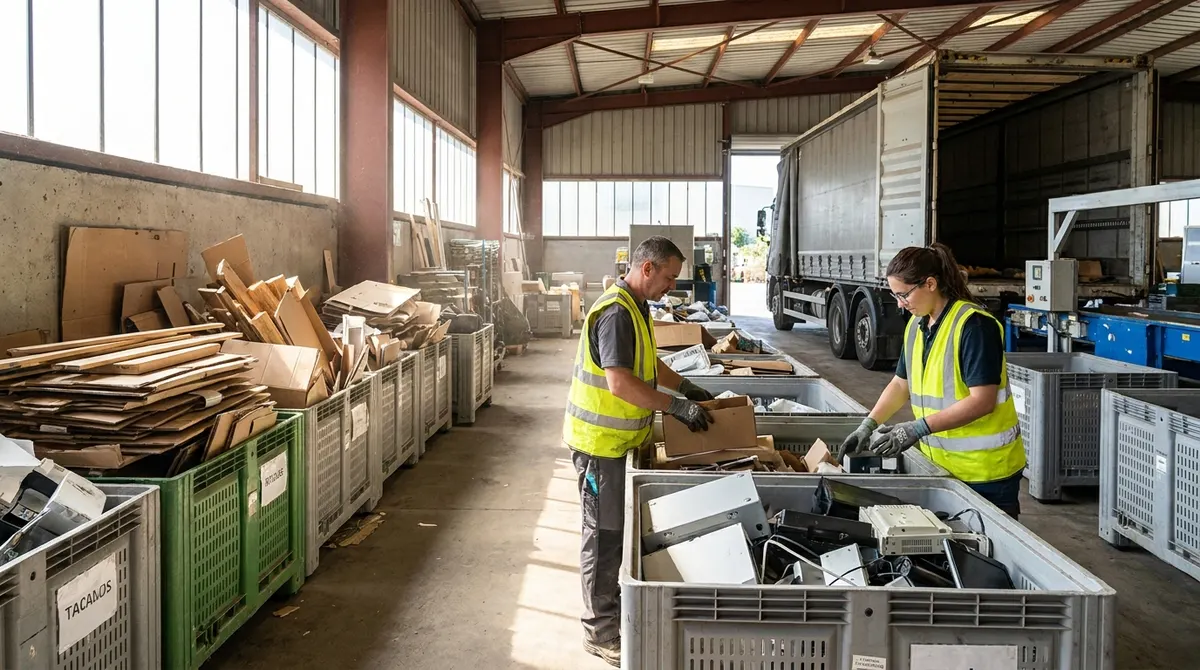
Eco-friendly junk removal comes down to sorting: metal to scrap, usable furniture to donation, e-waste and mattresses to dedicated processors, and only the remainder to disposal. Debris Dogs handles the lifting and hauling, then routes each material stream to the closest facility that accepts it.
| Material or item | Typical diversion route |
|---|---|
| Appliances, water heaters, exercise equipment | Scrap metal yard (steel, copper, aluminum recovered) |
| Working furniture, dressers, dining sets | Local donation center or reuse charity |
| Mattresses and box springs | Mattress recycler — foam, fiber, steel, and wood separated |
| TVs, monitors, computers, printers | Certified e-waste processor (many landfills refuse them) |
| Clean lumber, pallets, untreated wood | Wood grinding facility or mulch/biomass processor |
| Cardboard, paper, office files | Single-stream or commercial recycler |
| Yard waste, brush, branches | Composting or green-waste yard |
| Concrete, brick, dirt, roofing | C&D recycling facility, priced by weight |
| Paint, solvents, propane, batteries | Household hazardous waste site — not accepted in mixed loads |
| Soiled carpet, broken drywall, contaminated debris | Transfer station / landfill (no viable recycling market) |
Common junk categories and where an eco-conscious hauler typically routes them
Eco-Friendly Junk Removal Starts With Sorting the Load, Not the Marketing
Sorting is the entire mechanism. A truck that dumps every load at one transfer station diverts nothing, regardless of the word "green" on the door. A sorting operation separates metal, wood, cardboard, textiles, electronics, and reusable furniture either at the curb during loading or at a staging yard afterward, then makes multiple drop-offs. Metal is the easiest win because scrap yards pay for it. Furniture and appliances in working condition are the second easiest, since donation centers accept them at no cost when they can be resold. **Ask a hauler to name the specific recycler, scrap yard, or charity a load will go to** — a company that actually diverts material can answer in one sentence.
Junk Removal Diversion Rates Depend on What Is In the Pile
Diversion is item-dependent, not a flat percentage. A garage cleanout heavy in appliances, bikes, shelving, and cardboard can be mostly recycled or donated. A water-damaged basement full of soaked carpet, particleboard, and mold-affected drywall has almost no recyclable content, and honest haulers say so instead of claiming a number. Industry reporting on construction and demolition debris has long shown concrete, metal, and clean wood as the highest-recovery streams, while mixed and contaminated debris lands lowest. Reasonable expectation: many household loads land somewhere in the 30–60% diversion range, with metal-heavy and furniture-heavy loads going higher.
Junk Removal Pricing by Truck Volume Explains Why Recycling Costs Nothing Extra
Full-service junk removal is priced by volume — how much of the truck bed the load fills after the crew stacks it — plus surcharges for heavy material and for items with special handling fees. Extra stops at a scrap yard or donation center do not change that volume, which is why sorting is usually absorbed into the standard rate rather than billed as a "green fee." Categories that do carry add-ons: mattresses, tires, refrigerant-containing appliances, televisions, and dense debris priced by the ton. Expect ballpark market ranges of roughly $95–$175 for one item, $300–$450 for a half-full truck, and $450–$750+ for a full load, with the exact figure confirmed in person before any lifting starts.
Donation Beats Recycling in the Junk Removal Waste Hierarchy
Reuse ranks above recycling because nothing gets shredded, melted, or reprocessed. A dresser that still closes, a couch without tears or odor, a working microwave, and unopened building materials all have resale value to thrift charities and reuse warehouses. Two practical limits apply: most donation centers reject upholstered furniture with stains, rips, pet odor, or any water exposure, and cribs, car seats, and older appliances are commonly refused on safety grounds. Sorting donation-grade items into their own group before the truck arrives measurably increases how much of a load stays out of the waste stream.
Eco-Friendly Junk Removal Handles E-Waste and Hazardous Items Separately
Electronics and hazardous household products travel on their own route. Screens, circuit boards, and batteries contain lead, mercury, and lithium, and many jurisdictions restrict them from municipal disposal outright — which is why they go to certified processors rather than a general transfer station. Paint, gasoline, pesticides, pool chemicals, solvents, propane tanks, and asbestos-containing material are typically excluded from mixed junk loads altogether and belong at a household hazardous waste collection site. **A hauler that agrees to take paint cans or propane tanks in a mixed load is a warning sign**, not a convenience.
Junk Removal Buyers on Reddit Ask How to Verify Recycling Claims
Paraphrasing a recurring theme in r/ZeroWaste threads: users doubt "eco-friendly" hauling labels and suspect everything goes to the same landfill anyway. The verifiable checks are concrete — ask which scrap yard the metal goes to, which charity receives furniture, and whether the company can provide disposal or donation receipts for a large load. Commercial and construction jobs often require exactly that documentation, so companies doing that work already generate it. A second concern paraphrased from r/HomeImprovement: whether sorting slows the job down. In practice a two-person crew loads a standard half-truck cleanout inside roughly one to two hours, with sorting happening as items are carried out.
Local disposal specifics that determine what gets recycled
Diversion options are set by the facilities within reasonable driving distance, so the honest answer to "what gets recycled here" varies by county. Three local factors decide it. First, whether the nearest transfer station operates a co-located recycling or C&D sorting line, or is disposal-only — a disposal-only site means everything recyclable has to be hauled to a second location. Second, whether the county runs a scheduled household hazardous waste and e-waste collection day versus a permanent drop-off site, which controls how quickly paint, batteries, and old televisions can be cleared. Third, local scrap metal pricing, which determines whether appliances and metal shelving are worth a dedicated trip. Tipping fees are commonly charged by the ton, so heavy loads of concrete, dirt, shingles, and soaked material cost more to remove than bulky-but-light loads of furniture and boxes — that weight, not the item count, is usually what moves a quote. Rules on curbside bulk pickup, mattress disposal, and tire limits are set at the municipal level and change without much notice, which is another reason a same-day on-site look produces a firmer number than a phone estimate.
Related questions
How much does junk removal cost per truckload?
Full-truck loads commonly run about $450–$750+, half loads roughly $300–$450, and quarter loads around $150–$300, with heavy debris priced by weight. Volume after stacking sets the figure.
What items will junk removal companies not take?
Standard exclusions are paint and solvents, gasoline, propane tanks, pesticides, asbestos, medical waste, and ammunition. Those belong at a household hazardous waste collection site rather than in a mixed load.
Does junk removal include the lifting and carrying?
Full-service junk removal includes all lifting, carrying, and loading — from upper floors, basements, attics, and back yards. Nothing needs to be moved to the curb beforehand.
How do you get rid of an old mattress responsibly?
Mattress recyclers separate steel springs, foam, fiber, and wood frames for reprocessing. Most haulers apply a per-mattress handling fee, typically in the $25–$50 range.
Can junk removal happen the same day?
Same-day service is common when a crew and truck are open, especially for single items and partial loads. Booking earlier in the day improves the odds of a same-day slot.