How Are Old Appliances Recycled? — Complete Guide
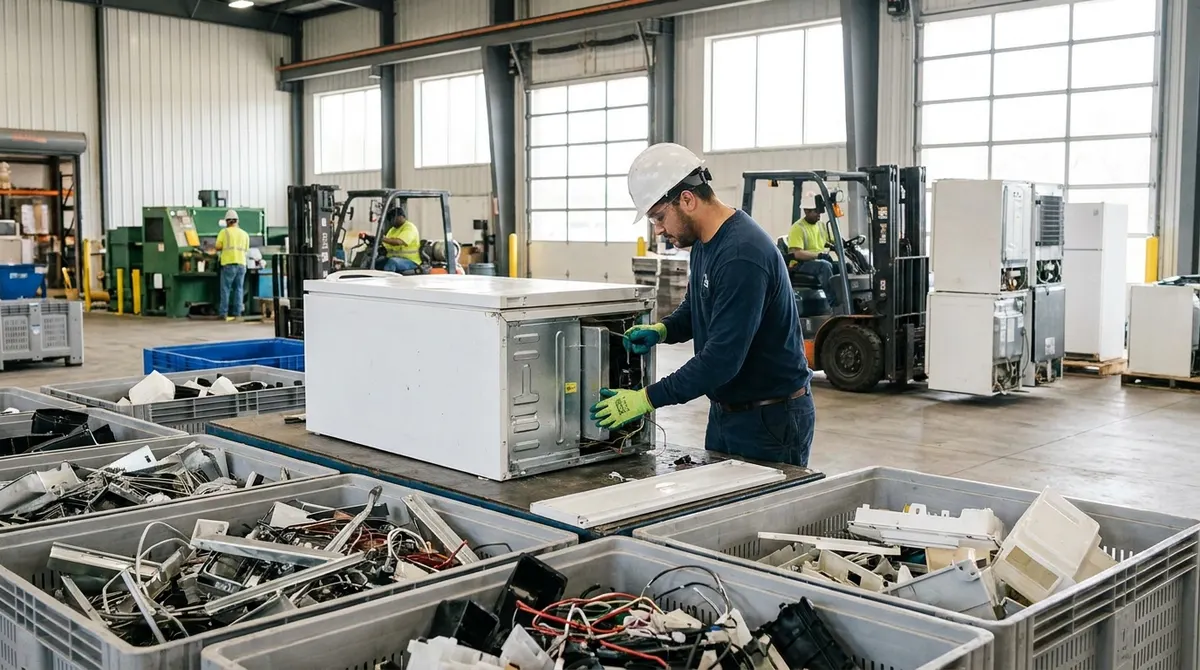
Appliance recycling means refrigerant recovery, fluid draining, hazardous-part removal, then metal shredding and separation. Our junk removal crew handles the disconnect, the carry-out, and delivery to a scrap processor, so a fridge or washer leaves the property in one trip instead of sitting in the garage.
| Appliance | How it is recycled | Typical haul-away range |
|---|---|---|
| Refrigerator / freezer | Refrigerant recovered by certified tech, compressor oil drained, foam insulation separated, steel shredded | $95 - $195 |
| Washer / dryer | Drum and cabinet shredded, copper motor windings and aluminum separated, concrete counterweight removed | $75 - $150 |
| Electric or gas range | Gas line capped, porcelain-coated steel shredded, glass door pulled, wiring harness separated | $85 - $165 |
| Dishwasher | Water lines drained, stainless tub and pump motor separated from plastic housing | $75 - $145 |
| Window A/C unit | Refrigerant recovered, copper coil and aluminum fins separated, small compressor drained | $65 - $135 |
| Water heater | Tank drained, sacrificial anode and glass lining separated, steel shell to scrap | $95 - $185 |
| Full kitchen set (4-5 units) | Same paths, single truck load, one labor block | $250 - $500 |
Appliance recycling path and typical full-service haul-away ranges (ballpark — exact price confirmed on a free on-site visit)
Appliance recycling starts with refrigerant recovery before any crushing
Any appliance with a sealed cooling system — refrigerator, freezer, window air conditioner, dehumidifier — has to be evacuated before the shell can be crushed or shredded. A technician taps the line, pulls the refrigerant into a recovery cylinder, and logs the unit. Older units may hold R-12 or R-22; units built after roughly 2010 usually hold R-134a, and many newer compact fridges use R-600a isobutane. Compressor oil is drained separately because it carries residual refrigerant. This is the step that separates a legitimate recycler from someone dumping a fridge in a field: an evacuated unit is scrap metal, an un-evacuated unit is a regulated appliance. Reputable haulers deliver to processors that document recovery.
Old appliances are shredded and then sorted by magnet and eddy current
After degassing and fluid removal, the appliance goes to a shredder that reduces the cabinet to fist-sized fragments. A drum magnet lifts the ferrous steel out first — that is the bulk of the weight and it goes to a mill to be melted into new steel. Non-magnetic metal continues down the line to an eddy-current separator, which throws aluminum and copper off the belt into a separate bunker. Copper motor windings from washer and dryer motors carry the highest scrap value per pound of anything in a laundry set. Plastics, glass, and foam insulation are picked out as residue; some foam is processed for its blowing agent, and the rest is landfilled.
Old appliances carry specific parts that must be pulled before shredding
Pre-shredder depollution is where the real environmental work happens. Chest freezers and older ranges can hold mercury tilt switches in the lid or door light. Units built before 1979 may contain PCB-bearing capacitors. Dryers and some ranges contain small amounts of asbestos-based insulation in very old models. Refrigerators built before roughly 1995 use CFC-11 blown foam, which is why the insulation panel is handled separately from the steel. Water heaters have to be fully drained. Gas ranges need the supply line capped, not just yanked. A crew that has moved appliances for years knows which units get flagged and which drop straight onto the truck.
Appliance haul-away pricing reflects weight, stairs, and disconnect work
Junk removal pricing for appliances is driven by three things: how much the unit weighs, how far it has to travel to the truck, and whether anything needs disconnecting. A dryer on a ground-floor garage slab is the cheap end. A 350-pound side-by-side refrigerator out of a finished basement, up a switchback stair, through a storm door, is the top of the range. Scrap steel prices offset a small part of the cost but never the labor — a fridge is worth roughly $10 to $20 in scrap steel, which does not cover two people, a truck, fuel, and recovery fees. Expect a real number after someone sees the unit and the path out.
Appliance recycling questions on r/appliances usually come down to who takes the refrigerant
A recurring thread on r/appliances, paraphrased: people put a fridge at the curb, the city refuses the pickup, and they cannot figure out why. The answer is the sealed system — most municipal crews will not take a cooling appliance until the refrigerant is documented as recovered, and many require a tag on the unit. Another common complaint on r/HomeImprovement, paraphrased: scrappers grab the fridge from the curb, cut the copper line, vent the refrigerant, and leave the carcass. A licensed hauler routes the same unit to a processor that evacuates it properly, which is the difference between recycling and open venting.
Appliance removal by a crew avoids the two most common DIY injuries
The two failures that show up over and over on self-hauled appliances are a dropped unit on a stairwell and a torn floor. A full-size refrigerator runs 250 to 400 pounds with the doors on, and the weight sits high and toward the back. Washers hold a 40 to 60 pound concrete counterweight that shifts when tilted. A two-person crew with an appliance dolly, straps, and floor protection moves a unit out in ten to twenty minutes and takes the liability with it. That is what the price range buys: the lifting, the truck, the disposal fee, and the recycling paperwork.