How Do You Dispose of Old Batteries? — Complete Guide
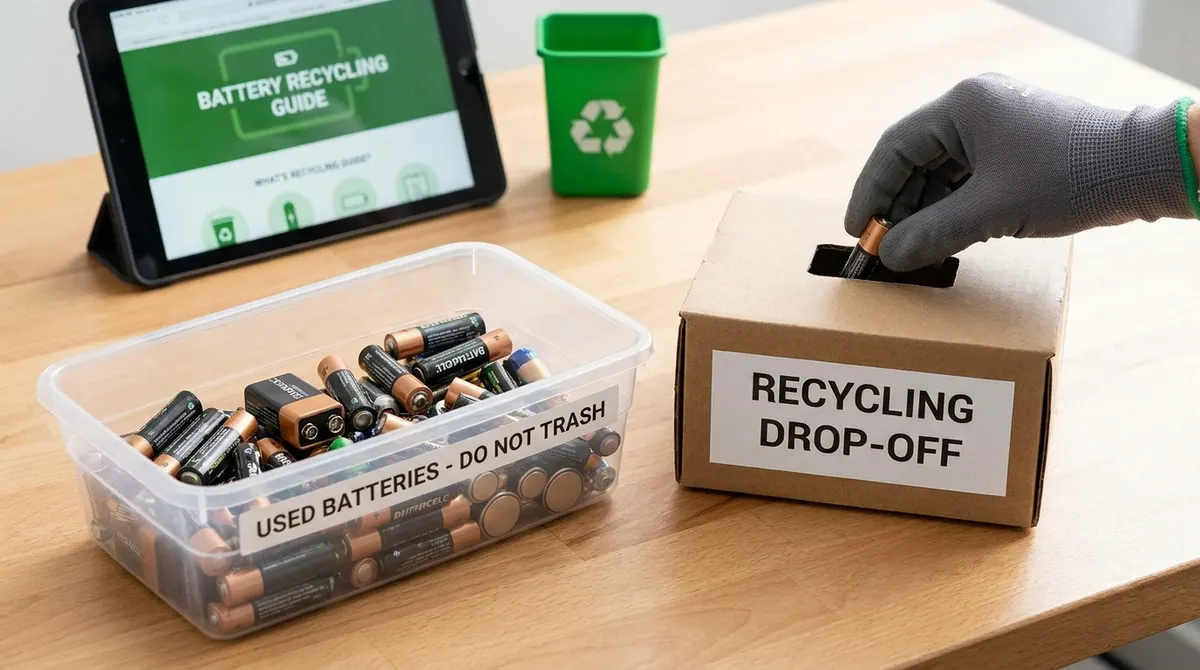
Batteries get recycled by chemistry: kiosk or hazardous waste site for cells, retailer take-back for lead-acid, taped terminals for lithium-ion. Our local crew handles the heavy battery-containing items — tool sets, TVs, appliances, e-bikes — and routes them to licensed recyclers during a scheduled cleanout.
| Battery type | Where it goes | Typical cost |
|---|---|---|
| Alkaline AA, AAA, C, D, 9V | Hardware or home-improvement store recycling kiosk, or county household hazardous waste (HHW) event | Usually no charge at kiosks and HHW events |
| Rechargeable NiMH and NiCd (tool packs, cordless phones) | Battery take-back bin at a hardware, phone, or electronics retailer | Usually no charge, under 11 lb per pack at most bins |
| Lithium-ion (laptops, phones, power tools, vapes) | Certified drop-off only, terminals taped, never curbside or in a compactor | Usually no charge; damaged or swollen packs go to HHW |
| Lead-acid car and marine batteries | Any auto parts retailer take-back counter | $10–$22 core refund back to you |
| Button and coin cells (watches, hearing aids, key fobs) | Jewelry, pharmacy, or hardware collection container | Usually no charge |
| E-bike, scooter, and EV-scale packs | Manufacturer or dealer take-back, or a licensed hazardous waste handler | Often $25–$150 handling, quoted by weight |
| Battery-containing items (TVs, laptops, tool kits, appliances) | Junk removal pickup routed to a licensed e-waste recycler | $95–$175 single item; $150–$450 quarter to half truck |
Battery types, correct disposal route, and typical cost range
Battery disposal starts by sorting cells into three chemistry groups
Sort the pile before you drive anywhere. Group one is single-use alkaline — the AA, AAA, C, D, and 9V cells from remotes, smoke detectors, and toys. Group two is rechargeable — NiMH, NiCd, and lithium-ion, identifiable by a printed voltage plus the word "rechargeable" or a Li-ion stamp on the wrapper. Group three is lead-acid, the heavy 30–50 lb block under a car hood or in a boat. Each group has a different legal route and a different fire risk. Mixing them in one bag is how loose terminals touch and heat up. Count the batteries as you sort: bins at most retail kiosks cap out around 11 pounds per drop, so a coffee can of old cells is one trip, a full storage tote is a household hazardous waste run.
Lithium-ion battery disposal requires taped terminals and a certified drop-off
Lithium-ion packs are the reason battery rules tightened. A punctured or crushed cell can enter thermal runaway and ignite, which is why garbage truck and transfer station fires trace back to lithium batteries hidden in household trash. Two steps prevent it. First, cover each terminal with clear packing tape or electrical tape, or bag each battery individually. Second, hand the batteries to a staffed collection point rather than dropping them in a curbside cart. Watch for swelling — a laptop or tool pack with a bulging case or a pillowed pouch is already failing and belongs at a household hazardous waste facility, not a retail kiosk. Store failing packs on concrete, away from paper and fabric, until drop-off day.
Lead-acid car battery disposal runs through retailer take-back and a core refund
Lead-acid is the one battery that pays you back. Auto parts retailers accept old car, truck, lawn tractor, and marine batteries at the counter and refund a **core charge of roughly $10 to $22**, whether or not you buy a replacement there. Lead-acid recycling recovers around 99% of the lead and plastic, which is why the take-back network is so dense. Transport it upright in a plastic tub or tray, never on a cloth seat — the electrolyte is sulfuric acid and will eat fabric and metal. If the case is cracked or wet, keep it outside, keep it upright, and take it straight to a household hazardous waste site instead of a retail counter.
Junk removal crews haul battery-containing items during a cleanout
Loose hazardous cells and licensed junk hauling are two different services, and honest framing matters here. A **junk removal crew is the right call for the objects batteries live inside** — the 200 lb tube TV in the basement, the dead cordless tool collection, the treadmill, the mini fridge, the e-bike nobody rides, the four bins of tangled electronics from a garage cleanout. Crews carry those out, load them, and deliver them to licensed electronics and scrap recyclers. Bulk loose batteries, leaking packs, and unlabeled drums typically stay with a household hazardous waste facility or a specialty handler. Most garage and estate cleanouts are a mix, so the practical move is to bag and tape the loose cells for a drop-off, then let a crew take the heavy battery-containing items in one trip.