Should You Donate or Throw Away Old Stuff? — Complete Guide
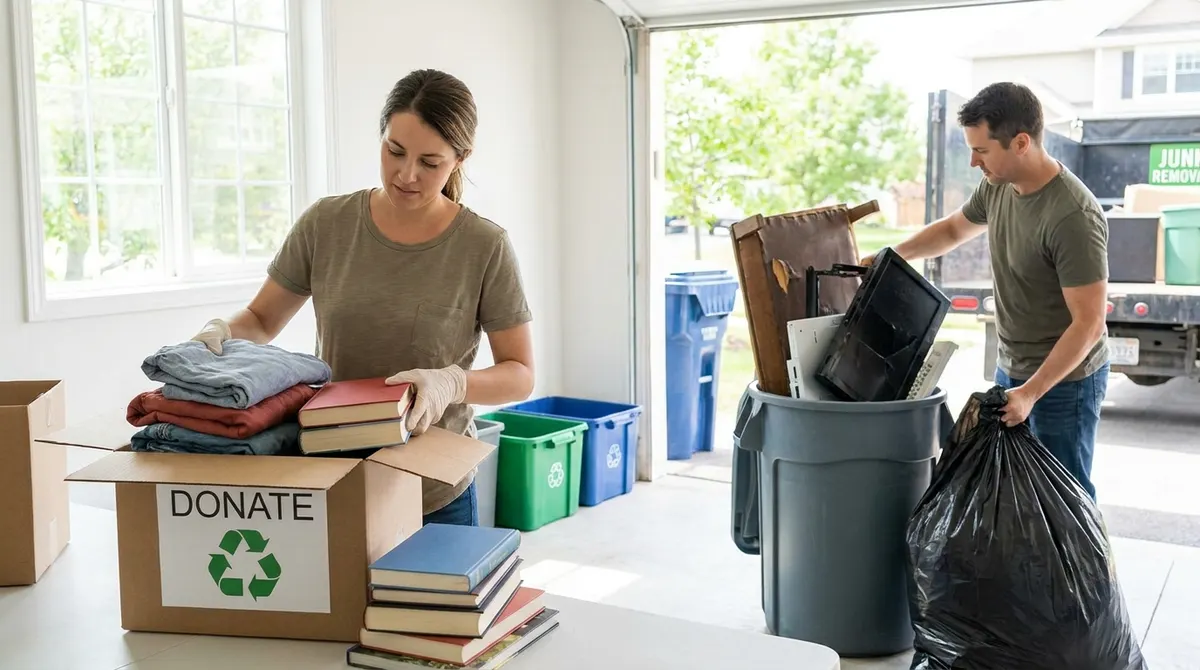
Donate what is clean and working; dispose of what is broken, soiled, or on a charity reject list. Our crew sorts both piles on site, delivers donations to a nonprofit, and hauls the rest away — one visit, no lifting, typically $150–$600 per load.
| Item type | Donate if | Dispose or recycle if |
|---|---|---|
| Sofas and upholstered chairs | No rips, no stains, no odor, frame solid, cushions present | Sagging frame, pet odor, water stains, any sign of bed bugs |
| Dressers, tables, bookcases | Solid wood or metal, all drawers slide, no missing hardware | Particleboard that is swollen, delaminating, or held together with brackets |
| Mattresses and box springs | Rarely accepted — a few programs take sealed, stain-free sets | Any stain, tear, sag, or unknown history; most charities decline all mattresses |
| Working appliances | Under roughly 10 years old, clean, plugs in and runs | Non-working, refrigerant units needing certified recovery, missing doors |
| Electronics and TVs | Flat-screen, powers on, remote and cords included | CRT tube TVs, cracked screens, dead batteries — e-waste recycling instead |
| Clothing and linens | Washed, no holes, in bags or boxes | Torn, moldy, or musty from basement or attic storage |
| Baby gear | Toys and clothes in current-standard condition | Cribs, car seats, and drop-side rails — recalled or expired safety items |
| Exercise equipment | Occasionally accepted if compact and complete | Treadmills and multi-station gyms — most charities decline for space and liability |
| Building materials | Full boxes of tile, unopened paint, cabinets in sets — habitat-type reuse stores | Broken drywall, wet lumber, single scrap pieces |
Donate vs. dispose: the condition test, by item type
Donation eligibility for used furniture turns on structural condition, not age
Charity intake staff check three things in under a minute: does the frame hold weight, is the fabric clean, and are all the pieces there. A 30-year-old solid oak dresser with drawers that slide is accepted. A five-year-old particleboard dresser with a swollen bottom panel is not. Upholstery is the strictest category — visible stains, tears, pet odor, or any bed-bug suspicion means automatic refusal, because the nonprofit cannot resell it and pays to dump it. A useful home test: if the item would be embarrassing to hand to a neighbor, it belongs in the disposal pile.
Charity pickup programs run on limited item lists and advance scheduling
Free charity truck pickup exists in most metro areas, but the constraints matter. Lead times commonly run one to four weeks out. Trucks typically take furniture and boxed housewares only — no mattresses, no appliances with refrigerant, no exercise equipment, no construction debris. Many programs require items placed at the curb or in a garage, not carried down from a second-floor bedroom. Crews reserve the right to leave anything that fails inspection on arrival, which strands the item and restarts the process. Donation drop-off at a store counter avoids the wait but requires a vehicle large enough for the load.
Mattresses, cribs, and tube televisions fall outside nearly every donation program
Four categories are close to universally rejected. Mattresses and box springs carry sanitation and bed-bug liability. Cribs, drop-side rails, and expired car seats fail current federal safety standards. CRT tube televisions and monitors contain leaded glass and route to certified e-waste recyclers, often for a per-unit fee. Refrigerators, freezers, window air conditioners, and dehumidifiers hold refrigerant that requires certified recovery before crushing. These items are not trash-can items either — many jurisdictions ban mattresses and electronics from curbside collection, which is why they end up on the disposal side of the sort.
Junk removal pricing follows truck volume, and the donation run happens in the same stop
Full-service haul-away is priced by the space the load occupies in the truck, not by hour. Typical market ranges: $95–$175 for a single item, roughly $200–$375 for a quarter to half truck, and about $450–$600 for a full truckload. Cost drivers include stairs, long carries, disassembly, and heavy materials that hit landfill weight fees. The efficiency argument for a paid pickup is the sort: one crew separates the donatable pieces, delivers them to a nonprofit, and drops the rest at a transfer station or recycling facility, so a mixed garage or estate cleanout closes in one appointment rather than three weekends of trips. Quotes are given in writing after a free on-site look.
Tax deduction receipts for donated goods require an itemized list and fair-market values
A blank receipt with no list has little value at tax time. Donors write their own inventory — quantity, item, and condition — and assign fair-market value, meaning thrift-store resale price rather than original purchase price. IRS guidance requires a qualified appraisal for a single item or group claimed above $5,000, and Form 8283 for noncash donations over $500. Photographing the load before it leaves the driveway takes two minutes and settles any later question. When a removal crew handles the donation drop, ask for the charity name and the drop-off receipt to keep the paper trail intact.
Decluttering threads on Reddit repeatedly flag charity rejections and wasted second trips
Paraphrasing a recurring complaint in r/declutter: donors load a car, drive across town, and get turned away at the dock for a stain or a missing drawer, then have to haul everything home again. A second theme in r/HomeImprovement threads: people underestimate how much a full basement actually is, then discover their local transfer station charges by weight and limits vehicle types. The spec fact behind both frustrations — a standard junk removal truck holds roughly 12 to 15 cubic yards, about the volume of six to eight pickup loads — which is why one professional visit replaces the rejection loop and the repeat dump runs.