How Do You Dispose of Old Paint? — Complete Guide
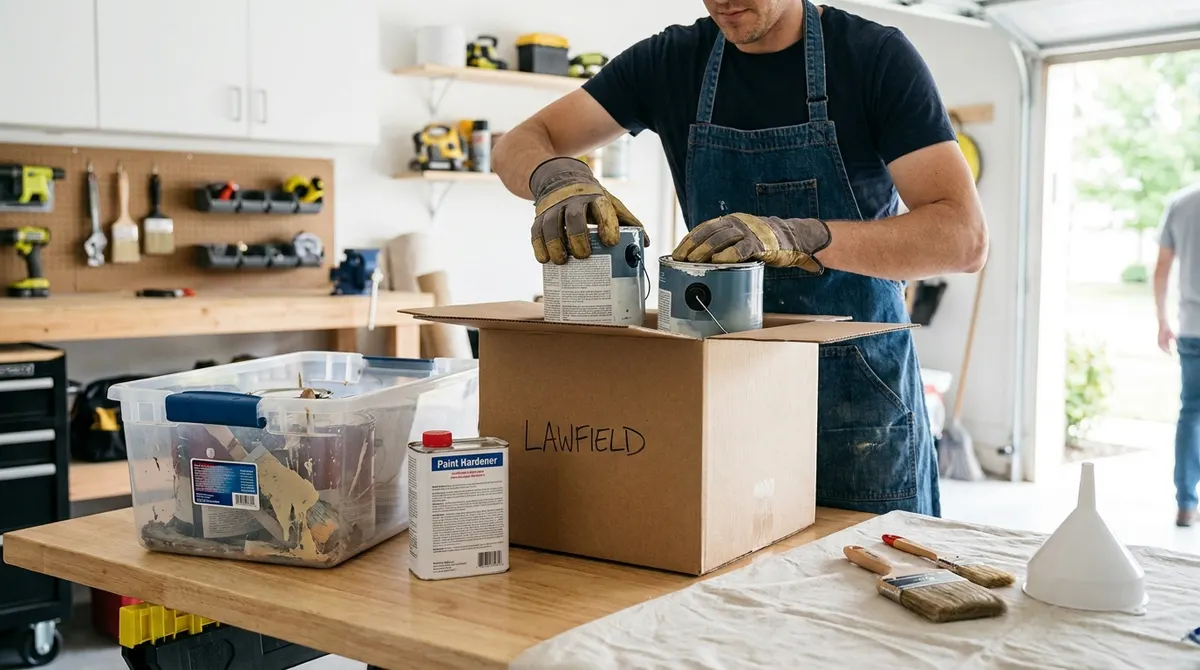
Dried latex paint goes in the trash; oil-based paint goes to household hazardous waste. Our local junk removal crew loads hardened cans, empty five-gallon buckets, and everything else stacked in the garage in one visit, with the price confirmed on a free on-site look.
| What you have | Correct disposal route | Typical cost range |
|---|---|---|
| Latex/acrylic paint, 1–3 partial cans | Harden with cat litter or paint hardener, lid off, then household trash | $5–$15 for a bag of litter or a hardener packet |
| Latex paint, 5–20 cans (garage backlog) | Harden and bag, or hand off to a junk removal crew with other items | $150–$350 quarter-truck load |
| Oil-based paint, stain, varnish, lacquer | County household hazardous waste event or permitted HHW drop-off | Usually no fee for households; appointment often required |
| Paint thinner, mineral spirits, strippers | HHW only — never trash, never storm drain | Usually no fee for households; commercial loads billed by weight |
| Unopened or leftover usable paint | PaintCare or retailer drop-off in participating states, or donate | No fee; commonly capped at 5 gallons per container, per visit |
| Empty, bone-dry cans with lids off | Recycling or trash depending on hauler rules | Included in normal service |
| Full garage cleanout with paint, shelving, tires, boxes | Truck-load junk removal, hazardous items routed separately | $300–$700+ depending on volume |
Old paint disposal routes and typical cost ranges by type and volume
Latex Paint Disposal Starts With Hardening the Can, Not the Trash Bin
Liquid paint is rejected at the curb because it leaks in the truck and in the landfill cell. The fix is solidification. Pour an inch of cat litter, sawdust, or shredded newspaper into a can that is one-third full or less, stir it to an oatmeal texture, and leave the lid off in a ventilated garage or shed for 24 to 48 hours. Larger amounts take a commercial paint hardener packet, which handles about a gallon of latex per packet and sets in 10 to 15 minutes. The can is ready for trash when you can turn it upside down and nothing runs or drips. Most haulers want the lid off so the driver can confirm the contents are solid at a glance. A five-gallon bucket that is half full will not harden with litter alone — split it into smaller containers or plan on two to three hardener packets.
Oil-Based Paint and Solvents Are Household Hazardous Waste at Every Transfer Station
Oil-based (alkyd) paint, spar varnish, deck stain, lacquer, shellac, mineral spirits, paint thinner, and chemical strippers are flammable and are classified as household hazardous waste. Those containers cannot be dried out and thrown away, cannot go in a rented dumpster, and cannot be poured on gravel, into a sink, or into a storm drain — a single gallon of solvent contaminates a large volume of groundwater and the storm drain feeds surface water, not a treatment plant. Check the label: 'clean up with mineral spirits' means oil-based, and 'clean up with soap and water' means latex. Route oil-based products to a county HHW collection day or a permanent drop-off facility. Most programs run by appointment, accept households only, and set a per-visit limit such as 10 gallons or 5 containers. Keep the product in its original labeled can so the site can sort it correctly.
Junk Removal Crews Take Dried Paint Cans as Part of a Garage Cleanout Load
Licensed haulers are not hazardous waste transporters, so the honest split is this: hardened latex cans, bone-dry empties, stacked five-gallon buckets, drop cloths, rollers, sprayers, shelving, and the rest of the garage go on the truck; live oil-based paint and solvents stay behind for HHW. Our crew does the lifting and stair work, sweeps the slab, and tells you on arrival which containers we can legally load — before any charge starts. A typical two-car garage backlog with 15 to 30 cans plus shelving and boxes lands in the half-truck range. If you would rather not spend a weekend stirring litter into 20 cans, that is exactly the labor being priced. Full-service haul-away is the paid, done-for-you option; the hardening method above is the free one, and it costs you time instead.
Paint Haul-Away Pricing Is Set by Truck Volume, Not by the Number of Cans
Junk removal is billed by how much space the load occupies in a 12- to 16-cubic-yard trailer or dump truck. Market-range figures: minimum load or a single small pickup around $100–$175, quarter truck $150–$350, half truck $300–$450, and full truck $450–$700 or more. Weight matters at the scale, and paint is heavy — a full gallon runs about 11 pounds and a full five-gallon bucket about 50, so 20 assorted cans can add 150 to 250 pounds and may push a light-looking load into a higher tier. Ranges are ballparks. The exact number is confirmed in writing during a free on-site visit, after the crew sees the stack, the access, and whether anything needs to be routed to HHW.