How Do You Clean Out a Storage Unit? — Complete Guide
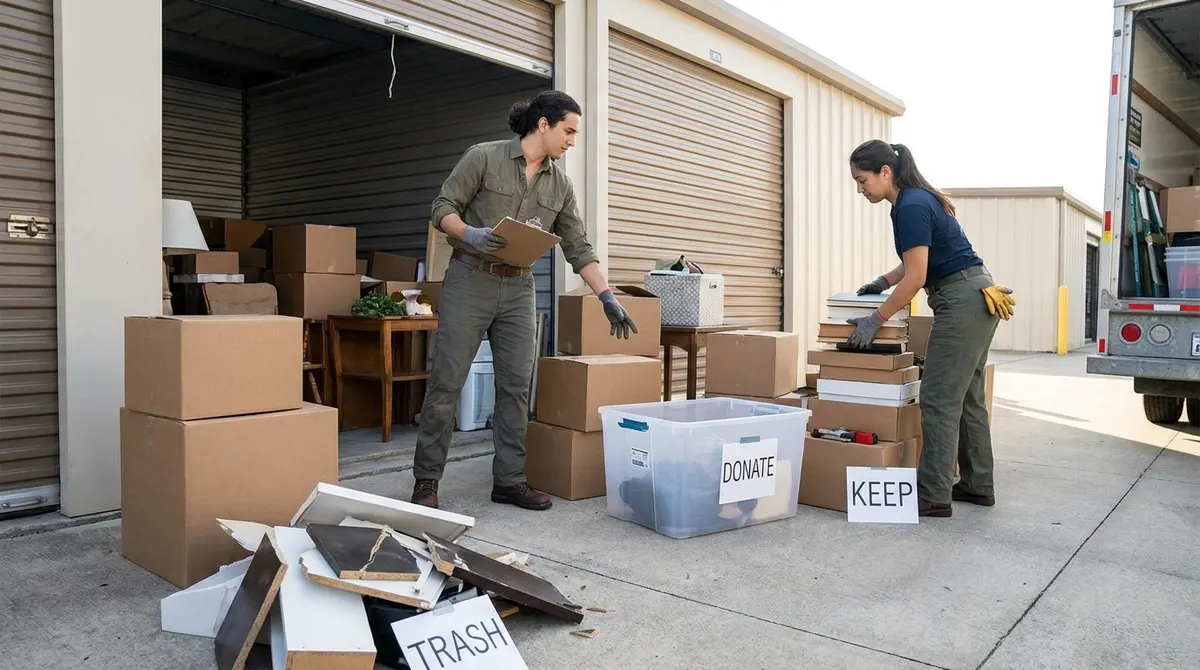
A storage unit cleanout is a sort-then-haul job: keep, donate, sell, discard, sweep. Most units are emptied in one to three hours by a two-person crew, with local pricing set by truck volume — and our haul-away team handles the stairs, elevators, and dump runs.
| Unit size / load | Typical ballpark range & time |
|---|---|
| 5x5 (closet-size, boxes only) | $100–$200 · 30–60 minutes |
| 5x10 (studio contents) | $150–$350 · 45–90 minutes |
| 10x10 (one-bedroom, packed full) | $300–$600 · 1–3 hours |
| 10x15 (two-bedroom, furniture heavy) | $400–$750 · 2–4 hours |
| 10x20 (garage-size, appliances included) | $500–$900+ · 3–5 hours |
| Partial load (1/4 truck or less) | $100–$250 · under 1 hour |
Storage unit size vs. typical cleanout ballpark and crew time (ranges, not quotes)
Storage unit cleanout works fastest when sorting happens in one pass, not three
Open the door and pull everything within arm's reach into the drive aisle before deciding anything. A single-pass sort uses four zones: keep, donate, sell, haul. Boxes that have not been opened in two or more years almost always land in donate or haul. Paperwork, photos, and small valuables are the only categories worth slow review — set one bin aside for them and keep it in the car, not the pile. Crews arriving for a full cleanout will empty whatever is left standing in the unit, so the sort has to be finished before the truck backs in.
Storage unit cleanout pricing is billed by truck volume, not by the hour
Junk removal is priced on how much of the truck bed a load fills — typically measured in quarter-truck increments. A packed 10x10 unit usually fills roughly one-third to one-half of a standard 15-cubic-yard removal truck, which is why the $300–$600 band covers most one-bedroom storage loads. Volume pricing means labor, stairs, elevator trips, and the disposal fee are inside the number rather than added later. Heavy outliers still carry surcharges: mattresses, tires, paint, and CRT televisions have their own per-item disposal costs at most facilities.
Storage unit cleanout timelines run one to three hours for a standard 10x10
Two movers clear a full 10x10 in one to three hours when the drive aisle is open and the door is roll-up rather than swing. Add 20–40 minutes for indoor climate-controlled units where everything travels by cart to a freight elevator. Second-floor units without an elevator can double the time. Booking the first slot of the day matters because most facilities gate-lock access in the evening, and a load that cannot be finished before closing turns into a second visit.
Storage unit cleanout must end with a swept floor to stop the next month's rent
Facilities do not consider a unit vacated until it is empty, swept, and the lock is removed — the tenant's own padlock left on the latch is the most common reason a closed-out unit keeps billing. Take photos of the bare floor with the door open and give written notice at the office the same day. Many operators require notice before the billing date, so a cleanout finished mid-month often still owes that month. Removing the lock and confirming the vacate in writing is what actually stops the charges.
Storage unit cleanout items that need separate disposal instead of the landfill
Mattresses, box springs, tires, car batteries, paint, propane tanks, fluorescent tubes, and electronics are handled at different endpoints than general household bulk. Paint, fuel, pesticides, and propane are refused by curbside and by most junk trucks and go to a household hazardous waste drop-off. Usable furniture, clothing, tools, and unopened housewares are worth routing to a donation partner — donation diversion lowers the tonnage that gets billed at the transfer station. Ask which categories a crew is licensed to carry before the truck is loaded so nothing is left sitting in the unit.
Storage unit cleanout after an auction or lien purchase runs on the facility's clock
Auction buyers are typically given 24 to 72 hours to empty the unit and sweep it, and the cleaning deposit is refunded only after the floor is bare. That deadline is what pushes most buyers toward a same-day haul crew: the resale items come out first, and everything unsellable is loaded in one trip. Bring a cart, a dolly, and gloves — auction units are frequently packed with unlabeled boxes, glass, and broken furniture. A single scheduled truck visit is usually cheaper than repeated personal-vehicle runs plus per-load dump fees.
Storage unit cleanout complaints on Reddit center on hidden fees and second trips
Paraphrasing a recurring thread on r/junkremoval: users say the frustration is not the price but the price changing after the truck is loaded. The fix is a walk-through and a written volume estimate before anything moves — volume-based quotes are confirmed on-site at no charge, in writing, before loading. A second common r/declutter thread paraphrases the same regret: renters who tried to empty a 10x10 with a sedan report five or six trips and a weekend gone, when a two-person crew clears the same unit in under three hours.
Local storage cleanout specifics
Local storage cleanouts are shaped by three things: facility access hours, county transfer-station tipping fees, and item bans. Most self-storage sites in the area gate-lock between early evening and morning, so crews schedule cleanouts as daytime appointments and need the gate code or an on-site manager. Disposal is charged by weight at the county transfer station, which is why furniture-and-appliance loads price higher than the same cubic feet of boxes. Mattresses and tires carry per-item fees at nearly every regional facility, and household hazardous waste — paint, solvents, propane — is accepted only at designated drop-off events or a permanent HHW site, never in a mixed load. Climate-controlled buildings add cart-and-elevator time. Free on-site estimates are standard practice in this market, and confirming the unit number, floor, and elevator access when booking keeps the visit to one trip.
Related questions
How much does it cost to empty a 10x10 storage unit?
Most packed 10x10 units fall in the $300–$600 ballpark, based on the share of truck volume the load fills plus disposal fees for mattresses or appliances.
Who is responsible for cleaning out a storage unit after a death?
The estate's executor or administrator controls the unit and must show the death certificate and letters of authority to the facility before contents are released or hauled.
Can junk removal crews take items out of a storage unit the same day?
Same-day storage cleanouts are common when the facility gate is open, access is confirmed, and the unit is on the ground floor or served by an elevator.
What will junk removal not take from a storage unit?
Paint, solvents, propane tanks, pesticides, car batteries, and asbestos are excluded from standard loads and go to a household hazardous waste drop-off instead.
How do you stop storage rent after cleaning out the unit?
Empty and sweep the unit, remove your own padlock, then give the office written vacate notice — units with a lock still on the latch continue to bill.