How Do You Dispose of an Old Lawn Mower? — Complete Guide
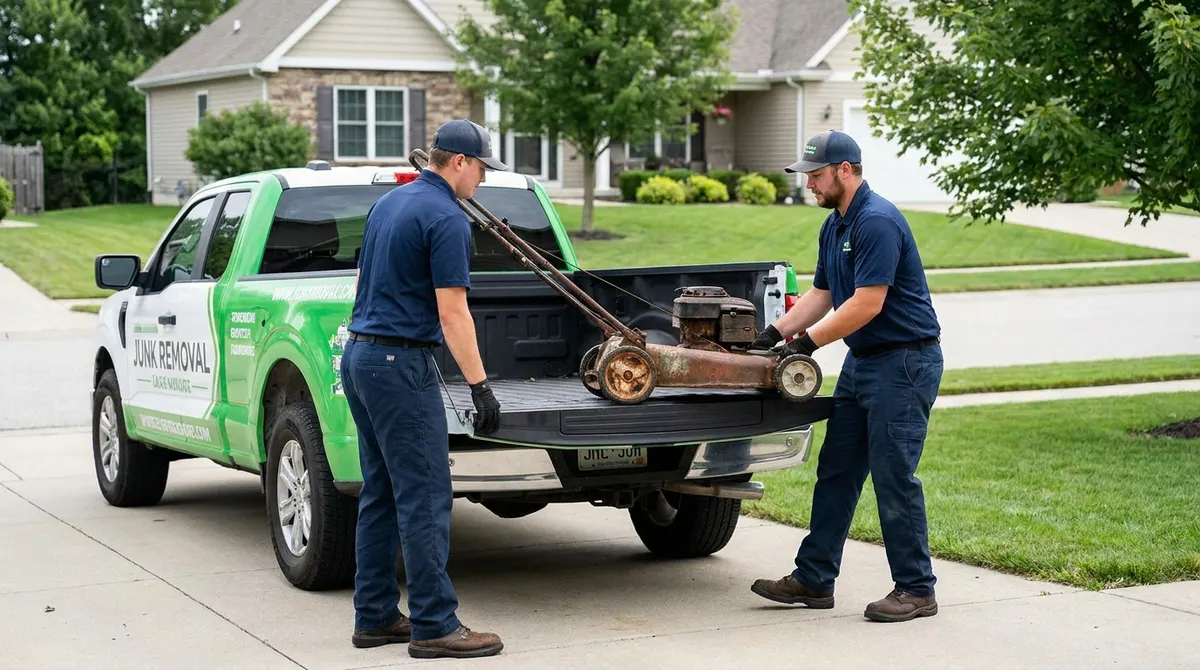
Old lawn mowers are disposed of through scrap metal recycling or a transfer station after fuel and oil are drained — or through a paid pickup where our crew does the lifting. Bin There Junk Removal handles mowers, edgers, and shed cleanouts across the local service area.
| Mower type | Typical weight | Prep before disposal | Typical full-service removal cost |
|---|---|---|---|
| Reel / manual push mower | 18 – 30 lbs | None — all steel, scraps as-is | Usually inside the minimum load, $80 – $150 |
| Gas push mower (21 in. deck) | 60 – 90 lbs | Drain gas tank and crankcase oil | $80 – $175 |
| Self-propelled gas mower | 80 – 110 lbs | Drain fuel, oil; disconnect spark plug wire | $95 – $195 |
| Battery / electric mower | 45 – 75 lbs | Remove lithium-ion battery pack, recycle separately | $85 – $165 |
| Riding mower / lawn tractor | 350 – 600 lbs | Drain fuel and oil, disconnect battery terminals | $150 – $350 |
| Zero-turn mower | 600 – 1,100 lbs | Drain fluids, disconnect battery, secure deck | $250 – $500+ |
Lawn mower disposal: weight, prep, and typical removal cost per unit
Lawn mower disposal begins with draining the fuel tank and crankcase oil
Scrap yards, transfer stations, and junk removal crews all require gas mowers to arrive with fluids out. Run the mower until the tank is empty, or siphon the remaining gasoline into a sealed metal or approved plastic can. Then tip the mower toward the spark-plug side and drain the crankcase oil into a pan — most walk-behind engines hold 15 to 20 ounces. Used motor oil and old gasoline are household hazardous waste, not trash: many auto parts stores accept used oil in sealed containers at no charge, and household hazardous waste days accept mixed old fuel. Disconnect the spark plug wire before moving the mower so the blade cannot kick over.
Gas mowers are 70 to 80 percent recyclable steel, aluminum, and copper
A standard walk-behind mower is a steel or aluminum deck, a cast-aluminum engine block, a steel crankshaft and blade, copper windings in the starter, and four wheels of plastic. Scrap yards buy the whole unit as light iron or shred steel, generally paying $5 to $20 for a push mower depending on weight and current market rates. Higher payouts come from stripping the aluminum deck and engine block separately, though the labor rarely pays for itself on one mower. **Recycling keeps roughly 50 to 80 pounds of metal out of the landfill per mower**, which is the reason most yards and transfer stations will take one even with no payout.
Curbside trash pickup rejects most gas-powered lawn mowers
Residential collection crews leave gas mowers at the curb for two reasons: residual gasoline in the tank and carburetor is a fire risk inside a packer truck, and small engines are classified as bulk metal in most municipal contracts. Some municipalities accept a fully drained mower on a scheduled bulk-item day, usually with a limit of one to three bulk pieces per pickup and a tag or advance call. Rules differ by hauler and municipality, so confirm with the local public works or solid waste office before setting a mower out. Unclaimed mowers left at the curb often draw a violation notice.
Battery-powered mowers require the lithium-ion pack removed before the metal is recycled
Cordless electric mowers use 40V to 80V lithium-ion packs that must never go into a trash cart, a scrap bin, or a junk truck still attached. Lithium cells damaged by compaction are a documented cause of truck and transfer station fires. Slide the pack out, tape the terminals, and drop it at a battery recycling collection point — many hardware stores, home centers, and battery retailers host free take-back bins. Once the pack is out, the deck, motor, and frame scrap the same way a gas mower does. Lead-acid batteries from riding mowers are handled separately and are accepted by most auto parts stores as core returns.
Riding mowers and lawn tractors need two people, ramps, and a winch
A dead lawn tractor will not roll onto a truck. Non-running riding mowers with seized engines or flat tires typically require a winch or a two-person push up aluminum ramps, and 350 to 600 pounds of dead weight on a slope is where most DIY disposal attempts stop. Fluids come out first — gas, engine oil, and often hydrostatic transmission fluid — and the battery terminals get disconnected. Scrap yards accept whole tractors and generally pay by weight as light iron. **Removal pricing for riding mowers runs higher than push mowers because of the equipment and labor involved, not the disposal fee.**
Junk removal crews handle mower disposal as a done-for-you same-day pickup
Paid removal exists for the homeowner who does not want to siphon fuel, lift 90 pounds into a car trunk, or drive to a scrap yard during weekday hours. A two-person crew walks into the shed or side yard, carries the mower out, loads it, sweeps up, and delivers it to a metal recycler. **Single-item mower pickups generally price at $80 to $175, with riding mowers from $150 to $350** — market-range figures, with the exact number confirmed in writing at the door after a free on-site look. Most crews will also take the gas cans, edger, string trimmer, old hoses, and shed shelving in the same trip, which is usually cheaper per item than a mower alone.
Old lawn mower value drops to scrap weight once the engine will not start
A mower that runs still has resale value: working push mowers commonly sell used in the $40 to $125 range, and a running lawn tractor can bring several hundred dollars locally. A mower with a blown engine, cracked deck, or seized crankshaft is worth scrap weight only. Small-engine repair shops sometimes accept non-running mowers for parts, and some accept them free of charge because the carburetor, wheels, and blade have resale value. Check whether the engine turns over by hand before writing a mower off — that single test separates a resale listing from a scrap trip.