Shed Removal and Demolition — Complete Guide
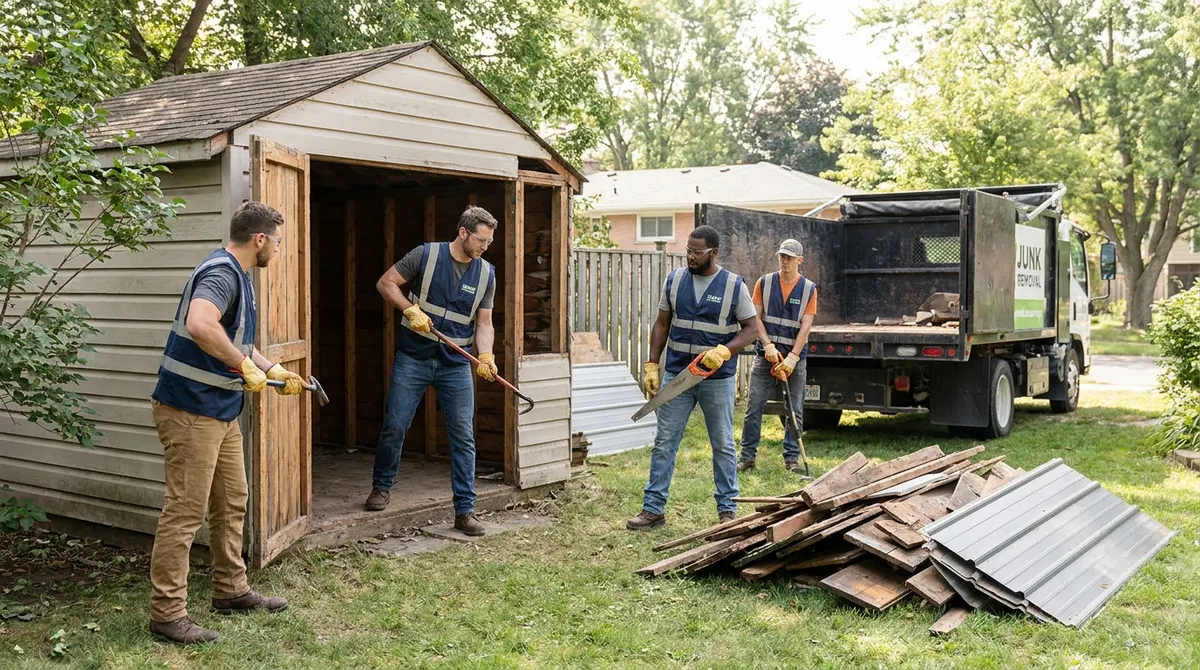
Shed demolition and haul-away generally costs $350 to $1,400, with slab breakout priced separately. Our team handles the teardown, loading, and disposal in one visit, and confirms the exact figure on a free on-site look at the shed, the slab, and the gate width.
| Shed type and size | Typical range and crew time |
|---|---|
| Resin or plastic shed, 6x8 to 8x10 | $300–$600; 1–2 hours, mostly unbolting panels |
| Metal shed, 8x8 to 10x10 | $350–$700; 2–3 hours, sheet metal cut and bundled |
| Wood shed, 8x8 to 10x12, wood floor | $500–$950; 3–4 hours, roof and shingles stripped first |
| Wood shed, 12x16 to 12x20, framed and shingled | $900–$1,800; 4–7 hours, two to three workers |
| Barn-style shed with loft, 12x24 and up | $1,500–$3,500+; often a two-visit job |
| Concrete slab breakout and haul (add-on) | $400–$1,500; priced by thickness, rebar, and wheelbarrow distance |
| Poured pier or footing removal (add-on) | $150–$500 depending on pier count and depth |
| Debris-only pickup, shed already down | $200–$650 by truck volume and weight |
Typical shed demolition and removal cost ranges by type and size (ballpark market ranges — exact price confirmed on-site)
Shed demolition includes teardown labor that a standard junk removal pickup does not
Junk removal covers items already loose and loadable — boxes, old furniture, the lawnmower, the bagged yard waste. Shed demolition adds structural work: pulling asphalt shingles, prying roof sheathing, unbolting or cutting wall panels, cutting framing into truck-length pieces, and pulling nails out of anything that will be hand-carried. That labor is why a 10x12 wood shed prices higher than the same volume of loose lumber stacked at the curb. Light demolition stops at non-load-bearing accessory structures: sheds, playsets, fences, decks, above-ground pools, carports. Anything attached to the house, anything with electrical service still live, and anything over roughly 200 square feet on a permanent foundation usually moves into permitted contractor territory. A crew arriving for teardown should show up with sawzalls, pry bars, sledges, and a tarped drop zone — not just a truck.
Metal, resin, and wood sheds each come apart at a different speed
Resin and plastic sheds are the fastest teardown. Panels unbolt, the roof lifts off in sections, and the whole structure fits in a single truckload with room left over. Metal sheds take longer than they look: thin galvanized panels bend, screws seize with rust, and cut edges need bundling so nobody gets sliced during loading. Wood sheds are the labor-heavy category. **Asphalt shingles alone add roughly 200 to 350 pounds on a 10x12 gable roof**, and shingles are dead weight that eats truck capacity fast. Pressure-treated floor joists and skids are heavy, wet, and cannot be burned or dropped in clean-wood recycling. Older sheds occasionally carry cement-board siding panels; anything suspected of containing asbestos should be sampled before a saw touches it rather than after.
A demolition permit and an 811 utility locate come before demo day, not after
**Many municipalities require a demolition permit for accessory structures above a set square footage — commonly around 100 to 200 square feet or anything on a permanent foundation.** Requirements vary building department to building department, so a two-minute call to the village or city permit desk settles it before a crew is scheduled. The step homeowners skip more often is the utility locate. **Illinois law requires a locate request at least 48 hours before digging, weekends and holidays excluded, through JULIE at 811 or 800-892-0123.** The request is free, and marks generally stay valid about 28 days. Critical detail: JULIE marks public utility lines, not private ones. The buried electrical feed a previous owner ran out to the shed, the gas line to a former grill stub, the irrigation main, and the low-voltage landscape wire are all the property owner's responsibility to locate. Slab breakout and footing removal are digging. Panel unbolting is not.